
I’ve been listening to the 2025 BBC Reith Lectures, given by Rutger Bregman, the young Dutch historian who became an international sensation in 2019 after standing up at the Davos World Economic Forum and berating a room full of billionaires for tax avoidance.
His lofty-sounding theme for the Reith Lectures was ‘moral ambition’. That, he explains, is what it takes for small groups of ordinary but committed people to brave ridicule and worse in order to right wrongs or effect positive change on a large scale. Examples he gave were the slavery abolitionists of the late 18th/early 19th centuries, and later the Fabians, who influenced Labour policy and social change at the turn of the 20th century.
Today, he argues, we have mislaid our moral ambition. We need to rediscover it to help correct the wrong turns currently being taken by society. In particular we must find it to stand against the uncontrolled progress of technology and artificial intelligence and, by implication, the greed and lust for power that fuels it.
Are we up to the challenge, he was asked. Most certainly. We may have mislaid it but we haven’t lost the capacity for moral ambition. And people are fundamentally decent, he said, as his experience has shown him. He has, after all, written a bestseller called Humankind.
Not surprisingly this struck a chord. The title of this blog is A Few Kind Words. I came up with it more than fifteen years ago after hearing the psychotherapist and author Adam Phillips mention, in passing, that the word kind derives from the word kin.
When we are kind in the modern sense, he explained, it is fundamentally because we are kin in the human sense. He went on to say that vulnerability most especially summons kindness, and we connect most powerfully with one another when we are most vulnerable.
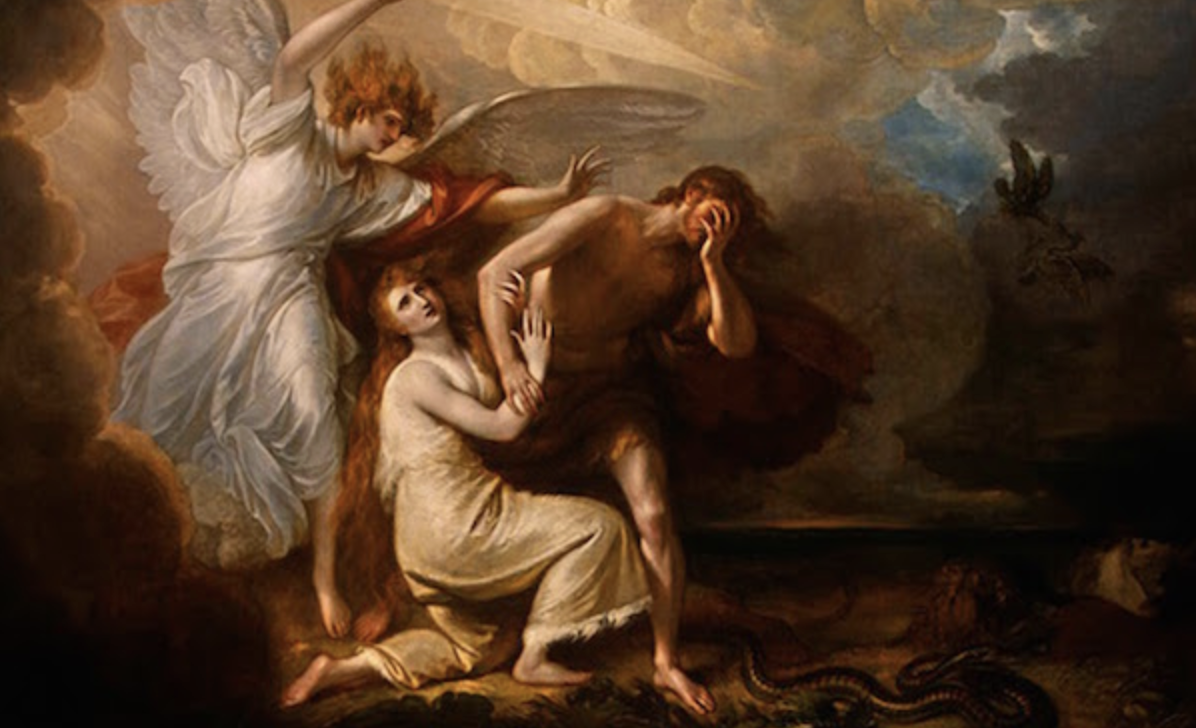
The same idea is echoed in the name of the creative writing programme I have been involved in since the early 2000s, Dark Angels. It was coined by one of my two co-founders, John Simmons, with reference to Milton’s Paradise Lost.
The dark angels, John maintains, are the humans, who have neither ascended to heaven, nor fallen to hell, but reside somewhere in between, in the broken ground where our flawed nature is the source of both our weaknesses and our strengths, and therefore our creativity. We are not angels but neither are we devils.
In more than twenty years of working with groups, in the context of both creative writing and personal development, sometimes together, I have witnessed time and again how in the right circumstances, when people feel safe and able to let their guard down, this humanity and vulnerability allows itself to be seen, and decency, empathy and compassion shine through.
I believe profoundly that this – humankindness – is our natural state. It may be evolutionarily advantageous, but that makes it no less powerful. And we are easily diverted from it. We deny it, lose sight of it, build walls around ourselves, see it as weakness, exploit it in others; whatever we have to do to cope with whatever life throws at us.
But at heart we wish more than anything else to connect, to love and be loved. Rutger Bregman’s moral ambition is surely an expression of that need, so that by putting certain things right, and not bowing to what may seem like the inevitable, we can become less divided and more connected. As we approach a new year which holds all sorts of disturbing uncertainties, that seems like something worth thinking about.













 A Few Kind Words