For the past twenty-five years I have been involved in one way or another with book festivals – as a board member, as a chair or moderator, as a presenter of my own work, and as a patron.
Book festivals make an incalculable contribution to our intellectual and cultural life, I’m in no doubt. But as we enter what has been called the post-literate era, they start to acquire a whole new level of significance.
I joined the board of the Edinburgh International Book Festival in the early 2000s. It was the largest literary festival in the world. There were nearly a quarter of a million visitors to its temporary campus in Charlotte Square gardens over the course of its annual seventeen-day programme.
(Since then it has moved venue and footfall has dropped, but that has been more than balanced by streamed events generating online attendance from all around the world. This year, 2026, the festival bookshop recorded its best-ever sales.)
A few years after I joined the board, in the run-up to the Scottish independence referendum, I heard it said that if you really wanted to know what was going on in Scotland, you should visit not the Scottish Parliament but Charlotte Square. And for Scotland, read the world.
I remember listening to three Mexican journalists talking about how they continued to report in the face of daily danger to their lives from the drug cartels. One of them had already been abducted and tortured. The other two lived in constant fear of the same fate, yet they kept working. Where else would you hear such a conversation?
I remember hearing a campaigner for Inuit land rights speak passionately about the horror of the Canadian Indian Residential Schools; a popular psychologist speaking about the meaning of kindness (from which came the title of this blog); a climber moving two hundred people to tears with an account of the death of his son.
These are just random memories, but they serve, I hope, to illustrate the impact of being in a room (or tent) in the physical presence of people with extraordinary stories or compelling ideas to communicate. It can touch you, shake you up, make you think, rewire your brain, in a way that cannot be replicated by any other medium – except, of course, by reading the books in question.
And so to post-literacy. A year ago, the Times journalist James Marriott wrote a Substack post, The dawn of the post-literate society, which attracted a huge readership. Among the disheartening facts he presented to support his argument were these.
One hundred years ago, in 1926, the book was the dominant form of mass media. Throughout the twentieth century IQ levels rose everywhere in the world, across all countries and cultures. Fifteen years ago they stalled and now, in some cases, they are in retreat. As it happens, it’s roughly fifteen years since the advent of smartphones, which today have vastly surpassed the dominance of the book.
This is the UK Year of Reading, yet one-third of adults say they have stopped reading books, while the UK’s National Literacy Trust describes the fall in children’s reading as ‘shocking and dispiriting’. In the US, reading for pleasure is down forty percent over the last twenty years. American academics report teaching undergraduates who are ‘functionally illiterate’.
To greatly over-simplify James Marriott’s thesis, reading stimulates cognition, scrolling diminishes it. As the machines become smarter, we become stupider, and the stupider we become the less able we are to preserve our democracies, and so our civilisation (let alone combat the march of the machines).
Yet, to this truly alarming vision of the very near future, if not the actual present, the continuing proliferation of book festivals brings a ray of hope. There are currently fifty-five in Scotland alone (that’s one for every 100,000 people). These must be part of the antidote to post-literacy, of which the most potent ingredient are surely the children’s programmes.
There is ample evidence that being introduced to books from an early age translates into lifelong reading habits, boosts learning capacity and literacy achievement, and promotes emotional intelligence and empathy. There can be no better places to introduce children to reading than at book festivals – colourful, noisy places where everyone is talking about books or reading them.
One might even argue that, along with their educational counterparts, those in charge of the children’s programmes of the world’s many book festivals hold the future of civilisation in their hands. It’s an awesome responsibility.
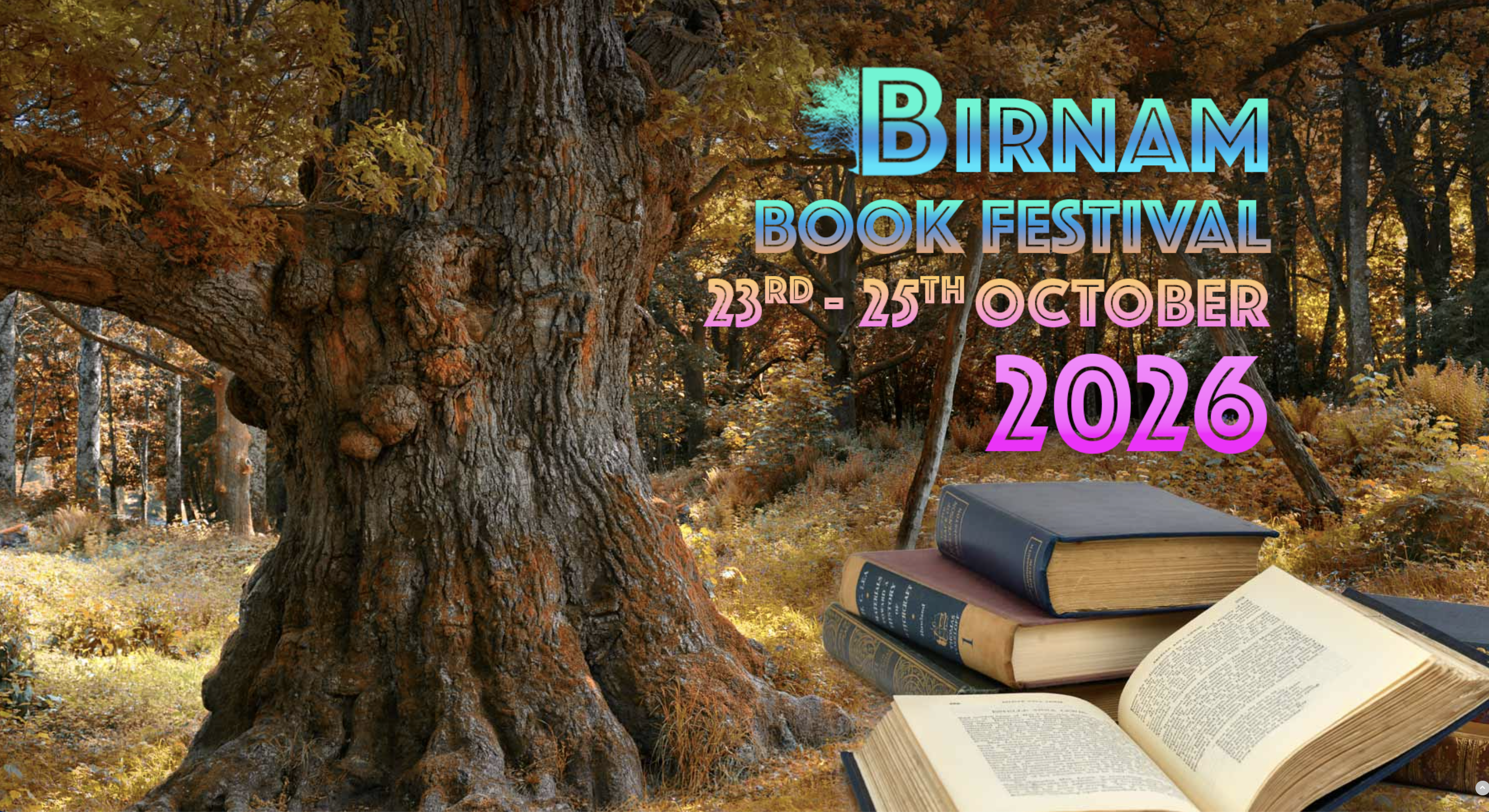
This evening (Friday) I will be helping, as patron, to open our very own, two-day Birnam Book Festival. Beset by Covid and the misfortune of severe weather events, the years since its launch in 2018 have been something of a struggle. But we now we have it on a firmer footing, and it has never felt more important that we do so.
Located in our local arts centre, Birnam Arts, the festival features twenty events for adults and children whose cognition will be thoroughly stimulated by novelists, writers of non-fiction, children’s writers and illustrators, artists, musicians and workshops.
(If the forecast gales haven’t blown the leaves off the trees, they will also have their senses thoroughly stimulated by the spectacular autumn colours in our wooded corner of Highland Perthshire.)
If you’re in the area over the weekend, please come and join the counter-revolution. Help us do our bit to fend off the advance of post-literacy, and stay smarter than our phones!