The New School

There has been a lot of interest in Friday’s post, and the school is happy for me to give details. It is The New School at Butterstone, Perthshire. www.thenewschool.co.uk

Tagged , , , | Leave a comment

Safe haven

This week I have been interviewing pupils at a small specialist school for young people who can’t get the support they need from mainstream education. It’s in a large old house, a lovely, comfortable, friendly place on a wooded hillside in a beautiful part of Scotland, and it seems that what happens there is almost miraculous.

The students, aged 12 to 20, have cerebral palsy, Aspergers syndrome, dyslexia, anorexia, obsessive compulsive disorder, attention deficit disorder, autism and a wide range of other conditions, though on first arriving there you would never know it. It’s just like any other school, bustling with noise and activity and youngsters coming and going between classrooms.

Even on closer inspection you wouldn’t necessarily spot the difference between these students and their mainstream peers. There are friendly smiles and plenty of eye contact, a natural curiosity about who you are, together with a readiness to welcome and give directions.

Then you start to hear the stories and you begin to understand the physical, mental or emotional difficulties these teenagers are learning to cope with and overcome. You also hear what it was like before they arrived in this safe haven, and in particular of the bullying they have almost all had to endure. I heard from one young woman of being locked in the kitchens of a previous school by her schoolmates who told her, ‘we’re doing it because we love you’. I heard from a young man who had been ostracised to the extent that in the packed assembly hall of a large city school, the only two vacant seats were those on either side of him. I heard of children being physically abused by their peers and emotionally abused by their teachers. All because of their difference.

When they finally arrive in this secluded place the support available to them is all-enveloping, and it comes not just from the staff but from their fellow students. Unconditional acceptance is the watchword, and as a visitor I found the sense of community palpable. Each individual child is treated according to his or her needs, and one senses that underlying the cheerful hurly burly, there is an immense body of knowledge and experience, along with a complex system of weights and counterweights that maintains the delicate balance necessary for this remarkable place to function.

I heard about new friendships, outdoor adventures, academic achievements, creative accomplishments. I heard about profound behavioural change within weeks of children first arriving. But the thing I found most affecting, indeed almost overwhelming, was the bravery of these young people, not only in dealing with the difficulties that in previous, less loving surroundings had driven some of them to despair and self-destruction, but in their readiness to put the cruelties inflicted on them by others behind them.

Here they are free to be themselves and get on with the business of learning about and enjoying life, as we all do. They seem to do it with particular gusto.

Tagged , , , , , , | 5 Comments

Just do it

In the last twenty-four hours I have spoken to two Dark Angels ‘graduates’ who both, independently of one another and unprompted by me, said in so many words: ‘the main thing that I got out of coming on the course was the realisation that the thing I love can also be the thing I do to earn a living.’ They were not, as you might expect, both talking about writing. One of them is a writer who works in the world of branding, but the other works in the hotel business and is an entrepreneur.

Along with a little glow of proprietorial pride came the unspoken thought: so why would one not do the thing one loved for a living? Then I caught myself, remembering that for many, if not most, people it’s not nearly so simple. Even loving the thing you do, which doesn’t presuppose that the loving came first, can be difficult, let alone doing the thing you love.

I know it well. For a long time I thought that the thing I loved was writing fiction, while the thing I did most of, writing for businesses, was simply to pay the bills. But the effect of compartmentalising the activities in that way was to cause me a great deal of conflict: the bread-and-butter work that was supposed to buy me a small amount of time each day to write fiction left me too depleted to write well, so I ended up resenting it deeply while also struggling with the books. For quite a few years I neither loved the thing I did, nor did with any satisfaction the thing I thought I loved.

Happily there came a turning point, a combination of people and ideas that appeared in my life, along with a wonderfully supportive wife who effectively bought me a year of what I think of, in agricultural terms, as ‘set-aside’ – during which I did not much of anything while my creative soil replenished itself. And now I do what I really love, which is to communicate what I believe in any way available to me, through writing or teaching or making music. But it took me half a century, a good deal of heartache, and I had to let go of some extremely powerful conditioning along the way.

So when I hear that our work with Dark Angels has helped people to that critical understanding, that moment when it becomes clear that there is really only one thing they’re here to do, I raise a silent cheer. And today I would without hesitation say to anyone what I said to my second daughter a couple of years ago when she was wrestling with difficult career decisions, which was: don’t play safe, be brave, look into your heart and see where your passion really lies, then put your trust in the universe and follow that passion. She did. And I don’t think she’d chide me for saying that she hasn’t looked back.

Tagged , , , , | 3 Comments

Dark Angels

Each new year John Simmons, Stuart Delves and I meet in the Scotch Malt Whisky Society’s comfortable rooms on Edinburgh’s Queen Street, as we did today. It’s our annual Dark Angels partners’ meeting. We have a bar lunch, a bottle of wine, review the courses we’ve run over the year past and plan the year ahead, then John goes back to London on the train and Stuart and I shuffle off into the murk of a Scottish January afternoon.

Now entering its eighth year of existence, Dark Angels is a strange, uncategorisable beast ­– part business communications course, part creative writing course – and as far as we know there’s nothing like it anywhere else on the planet. Our students come from corporations large, businesses small and the freelance community. The corporate ones tend to work in brand management, marketing or communications; the others are consultants of one kind or another, or they are business writers. All come out of an interest in improving the way they write at work.

The Dark Angels thesis is that good writing is good writing whatever the context, and that the world of business communication has everything to learn from the world of literature. The skills that novelists and poets bring to their work are entirely transferable to the workplace and the exercises we set our students reflect that. Moreover, we make no bones of the fact that ‘creative’ writers generally work with their emotions and imaginations fully engaged and that good writing, in the workplace or anywhere else, therefore involves a large degree of self-awareness. So our students find themselves writing poems, stories and descriptive pieces, often on very personal subjects.

Most years we come to the conclusion at our January meeting that we could make more money out of Dark Angels than we do, but for that to happen it would have to become the antithesis of everything it currently stands for – which is an alternative, sometimes mildly subversive, vision of the world of business communications. Anyway, we do it mainly because we all three love it; it has become a passion. The thrill of bringing together a group of people who don’t know each other and taking them on a journey of creative revelation and self-discovery is very hard to describe. But it can be hugely rewarding and it is almost always moving and inspiring, the human capacity for inventiveness and connection a constant source of wonder.

Does it really work? This is another thing we ask ourselves annually. And if it does, how do we know? After all, the goal is to send our students back to work not as fledgling poets (though that sometimes happens) but as confident, polished professionals in the unforgiving world of business communications. On one level we know it works because people keep coming back. This April we’re running the second Dark Angels masterclass at Merton College, Oxford, at which most participants will already have been on two previous courses. But what about career development? Do Dark Angels graduates move ahead in their jobs?

It seems so. A quick trawl of past courses today produced quite a few potential ‘case studies’. Among those who have said to us that Dark Angels was a career turning point, one has gone on to be the senior writer for a major soft drinks company and recently won a coveted D&AD ‘yellow pencil’ award for copywriting; one now holds a very senior position in one of the world’s largest creative consultancies; and one has helped build the brand and write the best-selling books for one of the UK’s most popular TV programmes. It would be condescending to say that they’re our protégés, but we’re still in touch with them and their achievements make us proud.

And the name Dark Angels? It’s a nod to Milton’s Paradise Lost and the idea that our creativity comes from our flawed human nature; that as Dark Angels we are neither those who have ascended nor those who have fallen, but that we occupy the fertile, if broken, territory somewhere in between. www.dark-angels.org.uk

Tagged , , , , , , | 1 Comment

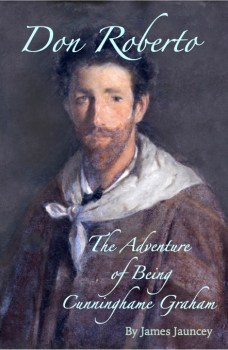
Don Roberto

My great-great uncle, RB Cunninghame Graham, or Don Roberto as he was known, was a character quite beyond anyone’s invention.

The Laird of Gartmore, in Stirlingshire, an aristocrat and descendant of Scottish kings, he outraged his landed neighbours by becoming successively a founder, with Keir Hardie, of the Labour Party, then a founder of the National Party of Scotland, and eventually founding president of the Scottish National Party.

A true radical and lifelong champion of the unemployed and oppressed, he was elected Liberal MP for North West Lanarkshire in 1886 on what must have seemed a hair-raising programme of reform which included nationalisation of industry, abolition of the House of Lords, universal suffrage, Scottish home rule and free school meals. He was the first ever socialist at Westminster and was once suspended from the House for uttering the word ‘Damn’. In 1887 he spent six weeks in Pentonville after being beaten and arrested during the Bloody Sunday protests in Trafalgar Square.

He wrote prolifically – travel, history, biography, poetry, essays, politics and short stories – and cut a dashing figure in the literary London of the late nineteenth and early twentieth centuries. Literary mentor to Joseph Conrad, he was also friends with John Galsworthy, GK Chesterton, WH Hudson, Ford Madox Ford and GB Shaw who acknowledged him as the inspiration for his play, Captain Brassbound’s Conversion. Handsome and bearded, with strong traces of his grandmother’s Spanish blood, he was painted by Lavery and sculpted by Epstein.

He was also an accomplished horseman and an inveterate adventurer. After leaving Harrow, aged seventeen, he travelled to Argentina to make his fortune cattle ranching, but ended up being conscripted into a revolutionary army. This was the first of a number of spectacular failures, on several continents, the most outlandish of which was his unsuccessful journey in 1898 to the forbidden city of Tarudant in southern Morocco.

Disguised as a Turkish doctor, and accompanied by three locals, he set off on horseback into the Atlas mountains at a time when Christians were liable to be killed on sight. He was within a day’s journey of the holy city when he was caught by the local Caid and imprisoned for three weeks in that potentate’s mountain castle. He told the story later in his book Mogreb-el-Acksa ­– which I took with me to Morocco before Christmas.

I have previously found him wordy and, to be perfectly honest, have steered clear of him since he has been my mother’s lifelong obsession, and one devotee in the family has always felt to me like enough. But this time I enjoyed the book greatly, as much for his descriptions and wry observation of human foible as for the extraordinary story. Everywhere we went in Marrakech – in the Medina and in the great square, Jemaa el Fna – but especially in the Ourika Valley leading into the mountains, I felt we were accompanied by his ghostly, rangy figure, clad in turban and robes, astride the black horse he had bought for the journey.

There are any number of incidents and discursions I could quote from the book, all of which lent an extra dimension to our holiday, but the one I like best is the observation, for which he offers no explanation (though he was clearly an admirer of the Arabs), that a European shepherd drives his flock from behind, but an Arab leads it from in front.

Tagged , , , , | Leave a comment

Rebel talk

Intervention. Usually, it’s what takes place between people arguing or fighting. We intervene to stop things getting worse. Perhaps, then, it’s not so odd that it’s a word used so frequently by health professionals. A medical intervention. A surgical intervention. … Continue reading

More Galleries | Tagged , , , , , | 6 Comments

Skating backwards

I don’t remember the miseries of the winter of 1963 (no running water in the house for several weeks, among other things, I’m told). I just remember the fun. I was fourteen, home from boarding school, and Perthshire was a winter playground.

There was endless tobogganing. The best, at Ochtertyre, just outside Crieff, was down a long, very steep field and straight out across several hundred yards of frozen loch, dodging skaters, a motorbike (how it stayed upright I have no idea) and even a couple of cars. It was surely the dream toboggan run, the best thing outside the Cresta.

Then there was ice hockey. Ten minutes from home, a neighbour had flooded a field to make a flight pond. Set in a hollow between two hills, it was shallow and froze very quickly. That winter it was a couple of acres of pure glass. We played with walking sticks and a shoe polish tin filled with sand to give it weight. God, could we skate – flat out across the ice, whacking the puck and occasionally each other, twisting and turning on sixpences until the surface was scored and powdered by our blades and our cheeks were crimson and burning in the cold. Late in the afternoon the sky would turn pink and fill with skeins of geese heading down to the River Earn to roost. I remember feelings of extreme exhilaration at the sport and the speed of it, combined with something approaching ecstasy at the beauty of our surroundings.

But the thing I remember best, and last week’s Imagination Club outing to that great empty ballroom put me in mind of it, was skating backwards. I got very good at it, skating forward as fast as I could, then pivoting on one toe to whip round into the backward movement with almost no loss of speed. Skating backwards involved making a snakelike movement of the hips as you transferred your weight from one ankle to the other, and more even than forward skating it seemed to depend on a good rhythm. If you got it right it was almost like flying (if you didn’t you were liable to trip and crack your skull).

So much of what we do works best when we get into a rhythm. I’m just back from the pub where for, obvious reasons, it was a quiet night. But there were three other musicians there, all good players, and after half an hour or so of warming up we spontaneously hit a groove. It was exciting, like skating backwards, and we kept it going for a good long time. We could tell that it was infectious from the way the audience reacted, nodding, smiling, tapping feet.

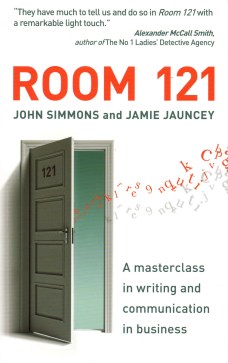
Another rhythm has me in its grasp at the moment, too. John Simmons and I have been commissioned to write a book about business writing and language which takes the form of a conversation between our two blogs. With meetings cancelled because of the weather this week, we’ve hit a groove in our exchanges, batting back and forth new blog posts almost every day. Again there’s something exhilarating about it, and I’m sure we’re both writing well at the moment.

It’s easy to forget that from the moment we first hear the thud-thud of our mother’s heartbeats, we are creatures of rhythm. Last week’s dancing reminded me of it, and so, oddly enough, has being in the grip of the coldest November on record.

Tagged , , , , , , , | 2 Comments

Gone dancing

Last Tuesday I went along on an Imagination Club outing. The club was set up three years ago by Barclay Price, director of Arts & Business Scotland, on the Heineken principle: that it would refresh the parts – well, one part in particular – that everyday organisational life doesn’t reach.

Three or four times a year, a small group of us meet for a few hours to do something that none of us have ever done before, and stretch our imaginations in the process. ‘We’ are mainly people from the higher echelons of the Scottish academic, arts, cultural and enterprise world, plus me as a kind of official recorder.

So far we’ve made short films at the BBC, spoons in the jewellery department of Edinburgh College of Art, and I can’t remember exactly what in an imaginary sandpit in Barclay’s office; written poems in Glasgow’s Mitchell Library, visited Jupiter Artland, a private sculpture park outside Edinburgh, played the World Game in a converted boathouse on the Fife coast, brainstormed new uses for touch-screen technology in a high-tech lab at Edinburgh University’s Informatics Department, and last Tuesday – danced.

The majority of us, I suspect, were dreading it – quite needlessly as it transpired. It was fantastic. We had an empty ballroom to ourselves, and an inspirational leader in the person of dancer and choreographer, Christine Devaney. Within half an hour she had us unashamedly gliding and swooping, springing and leaping around the huge space, lost in what we could make our own bodies do, entranced by the feeling of physical freedom. Within an hour we were in groups, rolling and tumbling and writhing in coils. And for the finale, all inhibition by now cast to the winds, we choreographed our own short dance pieces.

Total absorption, self-forgetting, is the thing that has characterised the best of these outings. This was certainly true of Tuesday, though it was accompanied by a strong sense of physical awareness, as if we were experiencing the world almost entirely through our bodies, and the relationship of our bodies to the others around us. It was, I realised afterwards, an almost unconscious form of communication; more than that, a form of communion, and a more powerful one than anything we normally achieve with words, outside perhaps poetry.

Most of us these days lead less physical lives than at any time in human history. To paraphrase Sir Ken Robinson’s famous remark about academics: our bodies have become a form of transport for our heads, they’re how we get our brains to meetings. This can’t be a good thing. Dancing and movement reminds us of something important about ourselves, something without which we’re incomplete.

Posted in Uncategorized | Tagged , , , | 6 Comments

Temples of Mammon

Thirty-nine years plus a few weeks ago I started my first job. Incredible though it now seems, it was in the City.

I had graduated with a law degree from Aberdeen University but wanted neither to practice law nor to stay in Scotland. What I really wanted to do was write stories and make records, but my father was an advocate, my stepfather a banker, and in those days one toed the line. So I signed up with one of the big London Scottish firms of accountants. ‘My boy,’ I seem to remember someone saying, ‘with a law degree and a CA under your belt, the world’s your oyster.’

I certainly remember my first day. The offices were on King William St, on the north side of London Bridge. As I walked anxiously down from Monument tube station, a great grey tide surged towards me across the bridge, shoes shined, brollies furled and bowlers bobbing up and down amid the throng. It was an unnerving sight.

I lasted six months. Despite, on an audit in Watford, writing the report I was asked to produce in the style of a Mickey Spillane thriller, I’m proud to say that I left voluntarily. By the following spring I was working in a West End bookshop and six months after that, en route to South America for a year on the road. My first attempt at grown-up life had failed magnificently.

Yesterday I found myself back among the temples of Mammon, a couple of bridges upstream from where I’d begun, running a day’s training for one of the country’s larger accountancy firms. There was an odd and brief moment of déjà vu as I approached their offices, but it didn’t last long. It seems almost superfluous to note that so much had changed. The art in the lobby. The pink shirts and short skirts and no ties. The information screens and bottled water and bowls of fruit.

It would be easy to say that the one thing that hadn’t changed was the language, but it wouldn’t be true. The world of taxation, accountancy and financial advice, let alone City regulation, is an infinitely more complex one than it was nearly four decades ago – and the language reflects it. Whereas many things have changed for the better, it’s probably fair to say that the language has changed for the worse. But attitudes also are changing and there’s now an awareness that it doesn’t have to be that way, which of course is why I was there.

That seems to me like a straw worth clinging to. Even down in the oily, throbbing maintenance area of the economic engine room there are people keen to make space for a few kind words.

Posted in Business speak, Business stories, Latin America, Travel | Leave a comment

War Horse

I seldom watch breakfast TV but I was staying in a hotel on Wednesday night, so yesterday morning I did. One of the guests was the former Children’s Laureate, Michael Morpurgo. The stage production of his story War Horse is about to go to Broadway, while Steven Spielbeg has also just finished filming it.

Animals have always been a challenge in the theatre. I remember going to see the original version of Equus at the Old Vic in the early ‘70s. Then they used large wicker horses’ heads worn by brown-clad actors. It worked. Equus was a profoundly disturbing theatrical experience.

Things have moved on. As we saw yesterday in a live studio demonstration, the horses in War Horse are whole, life-sized animals. The bodies and heads are wire armatures covered in gauze, the legs hinged sections of wood. Each horse has three attendant grooms in brown boots, breeches and waistcoat, who are really the puppeteers. They stand beside the animal as if tending to it and reach up, down or inside to manipulate the different parts of it with their hands.

So lifelike are the animal’s movements, so distinct its personality, that even in the brief couple of minutes the demonstration lasted I quickly forgot about the puppeteers. It was as if they had become transparent. It was a stunning example of how easily we can be persuaded to see only what someone wants us to see.

The three actor-puppeteers, we were told, were known respectively as Head, Heart and Hind; and this, I think, is the reason that this trompe l’oeil worked so beautifully. Working together, each immersed in his or her role, they conjured a living, breathing, feeling animal so real we could almost see its breath.

Head, heart and hind. I couldn’t help thinking that it’s sometimes helpful to think of organisations in anthropomorphic terms too. It reminds us that as well as a head, most organisations also have a heart, although they don’t always know where to find it. And they certainly have a hind. It’s what a lot of them spend an inordinate amount of time and effort trying to cover. But the main problem is that unlike in War Horse, their puppeteers so seldom seem to be working from the same script.

Tagged , , , , , | 3 Comments