-
This blog
-
This blog takes its title from the fact that kindness originally meant being kin, or kindred, or of the same kind – a reminder, if you like, that we are all humankind. I post regularly on Friday. Enter your email address below to Follow and receive each post direct to your inbox. A Few Kind Words is now also on Substack if you prefer to read it there: https://substack.com/@jamiejauncey.
- Join 800 other subscribers
-
Recent Posts
Categories
Archives
Summing up
I heard yesterday that my novel The Witness has finally earned out its advance, nearly four years after publication. Jenny Brown, my agent, tells me that a cheque for about £20 is on its way to my account. Champagne all round, then.
The economics of writing novels have never really made much sense for me. I started this book, my fourth, in around 2001, as an adult novel, and finished the first draft about three years later. It did the rounds of a dozen major fiction publishers and was turned down by all of them, though one or two said they thought it might work as a young adult title. So we took it to Macmillan Children’s Books who agreed to give it serious consideration if I was prepared to re-write it. I eventually did, once I’d realised that almost the only thing I needed do was re-cast the main character, making him an 18- rather than 45-year-old; everything else stayed much the same. It took me six months and I was rewarded by a contract with Young Picador and a £5000 advance.
The Witness was eventually published in August 2007, about a month after my father died. I think he always found it difficult to engage with this part of my life; he hardly read any fiction and the literary world was one he seemed to find hard to relate to. Yet the very last words he said to me, a couple of days before he died, were: “good luck with the book, old boy.” I would have liked him to see it in print; better still read it since there was much in it – the Highland landscape and way of life, issues of land-ownership, traditional music – that he would have enjoyed. But he’d suffered a severe stroke two years previously and wouldn’t have been able to read it, even if he had lived.
Today, it’s nearly ten years since I started work on the book. That means its earnings average £500 per annum. Its successor, The Reckoning, fares better because I wrote it much more quickly. I started work on it in January 2008 and it was published in November 2009. I also received a bigger advance, £6000. So The Reckoning has averaged slightly under £2000 a year so far, though that figure will decrease because the book isn’t yet close to earning out its advance. In total, including lending royalties but excluding appearance fees, writing fiction has brought me around £30,000 since my first novel was published in 1990. Call that £1500 per annum. Hah!
Yesterday – by coincidence, or perhaps not – just before I heard the extravagant news from Jenny, I had started work again on the last in this series of three young adult novels. I have been stalled at page 200 for over a year, mainly, though not wholly, through pressure of work. The other reason for the hiatus is that despite The Witness and The Reckoning being shortlisted for successive Royal Mail Scottish Children’s Book of the Year Awards, despite my going into something close to fifty secondary schools over a two-year period and promoting the books as hard as I possibly could, Macmillan deemed me not to be selling enough and sacked me in summer 2009. So there’s no contract and no advance for The Artefact, as it’s provisionally titled.
Why on earth am I bothering, then? It will be another six months’ hard graft, squeezed in between everything else, with the very real possibility of the book never seeing the light of day. Should a publisher materialise the advance will be nugatory, such is the current state of publishing, and I will almost certainly have to commit to a follow-up. Why bother? I’ve been asking myself this question for some months. I continued to ask it when we were at Merton last week, where I finally came to the simple conclusion that the story demands to be finished. It’s a living, growing thing, and to let it wither on the vine would be tantamount to abortion. I feel morally obliged to it, such is the power and energy of story.
Posted in Fiction, Publishing, The Reckoning, The Witness
Tagged publishing advances, young adult fiction, Young Picador
6 Comments
Oxford blue
I’m in Oxford now, at Merton College. Our Dark Angels students are working on their projects and I’m finding a brief moment of quiet in my room, remembering the first time I ever came here.
I was twelve years old. My mother had driven me down from Scotland to sit the scholarship exam for nearby Radley College; an heroic twelve-hour journey in a Morris Minor Traveller. We stayed, in what felt like tremendous splendour, at The Mitre, an ancient half-timbered pub on the High Street. We went to look at Christ Church, where my father had been a student, and wandered around the vast-seeming Tom Quad. I wanted to visit Carfax and Turl, streets my father had mentioned, simply because they had such strange names; I don’t remember if we did. I do remember feeling highly embarrassed, but also secretly rather proud, of being made to wear a kilt for the interviews. There were very few Scots at Radley in those days, and I think it caused a stir.
I didn’t get the scholarship, but a kind of consolation prize in the form of an exhibition (to this day I don’t know why they’re so called), which meant I had my name in italics, rather than bold, in the school list. It was worth £80 a year. It also meant that Oxford featured prominently in my life for the next five years. With leave from our housemasters, we cycled the five miles at weekends and loitered, ogled girls, spent our pocket money on records and improbable clothes (it was the mid-60s), occasionally went punting and inevitably, as we got older, pubbing – which involved dodging the dons, as Radley also styled its teaching staff. My home was deep in the Scottish countryside, and Oxford became much of what I knew about the grown-up world throughout my teenage years.
But I didn’t fulfil the promise of the exhibition. I was pushed early into the classics department to study Latin, Greek and Ancient History, a tiny hothouse for which I was neither temperamentally nor intellectually suited. Well into adult life I continued to have nightmares about sitting the Greek unseen exam without having memorised enough vocabulary. By the time I sat Oxford entrance, my academic career had followed a steady downwards trajectory for three years and I was thoroughly demoralised. Christ Church turned me down for PPE and I ended up in Aberdeen reading Law.
I brushed it off at the time, one does at the age of eighteen, and went on to enjoy greatly my time at another ancient university, the other end of the country. I gave the whole thing very little thought until much, much later, only a few years before my father’s death. He had been at a dinner for eminent Christ Church alumni where someone had said to him: ‘not surprising your son didn’t get in in 1967, the college had become very left-wing and the fact that you had been there would have gone against him.’
I was touched that he passed this on; it felt like a kind of apology. But it also reminded me that somewhere inside, the rejection had always slightly rankled. Not because I felt that I should have got in, but because I knew perfectly well that I hadn’t been up to it, the entrance exam the culmination of a three-year failure of education. After taking two A-levels, aged fifteen, and scoring two e-grades, I’d begged to be allowed to change from classics to modern languages. My housemaster’s response was to note in my report that I needed to grow up. I was trying.
And yet, these things are seldom black and white. Those three years of intensive Latin and Greek vastly increased my grasp of the English language and made me the writer I am. Without them I might easily not be at Merton now. On the other hand, my two Dark Angels colleagues, John and Stuart, both studied at Oxford. Sitting here now in a medieval building, at a desk in an undergraduate room, off a spiral stone staircase so narrow I almost have to turn my shoulders to climb it, I won’t pretend I don’t envy them.
I was twelve years old. My mother had driven me down from Scotland to sit the scholarship exam for nearby Radley College; an heroic twelve-hour journey in a Morris Minor Traveller. We stayed, in what felt like tremendous splendour, at The Mitre, an ancient half-timbered pub on the High Street. We went to look at Christ Church, where my father had been a student, and wandered around the vast-seeming Tom Quad. I wanted to visit Carfax and Turl, streets my father had mentioned, simply because they had such strange names; I don’t remember if we did. I do remember feeling highly embarrassed, but also secretly rather proud, of being made to wear a kilt for the interviews. There were very few Scots at Radley in those days, and I think it caused a stir.
I didn’t get the scholarship, but a kind of consolation prize in the form of an exhibition (to this day I don’t know why they’re so called), which meant I had my name in italics, rather than bold, in the school list. It was worth £80 a year. It also meant that Oxford featured prominently in my life for the next five years. With leave from our housemasters, we cycled the five miles at weekends and loitered, ogled girls, spent our pocket money on records and improbable clothes (it was the mid-60s), occasionally went punting and inevitably, as we got older, pubbing – which involved dodging the dons, as Radley also styled its teaching staff. My home was deep in the Scottish countryside, and Oxford became much of what I knew about the grown-up world throughout my teenage years.
But I didn’t fulfil the promise of the exhibition. I was pushed early into the classics department to study Latin, Greek and Ancient History, a tiny hothouse for which I was neither temperamentally nor intellectually suited. Well into adult life I continued to have nightmares about sitting the Greek unseen exam without having memorised enough vocabulary. By the time I sat Oxford entrance, my academic career had followed a steady downwards trajectory for three years and I was thoroughly demoralised. Christ Church turned me down for PPE and I ended up in Aberdeen reading Law.
I brushed it off at the time, one does at the age of eighteen, and went on to enjoy greatly my time at another ancient university, the other end of the country. I gave the whole thing very little thought until much, much later, only a few years before my father’s death. He had been at a dinner for eminent Christ Church alumni where someone had said to him: ‘not surprising your son didn’t get in in 1967, the college had become very left-wing and the fact that you had been there would have gone against him.’
I was touched that he passed this on; it felt like a kind of apology. But it also reminded me that somewhere inside, the rejection had always slightly rankled. Not because I felt that I should have got in, but because I knew perfectly well that I hadn’t been up to it, the entrance exam the culmination of a three-year failure of education. After taking two A-levels, aged fifteen, and scoring two e-grades, I’d begged to be allowed to change from classics to modern languages. My housemaster’s response was to note in my report that I needed to grow up. I was trying.
And yet, these things are seldom black and white. Those three years of intensive Latin and Greek vastly increased my grasp of the English language and made me the writer I am. Without them I might easily not be at Merton now. On the other hand, my two Dark Angels colleagues, John and Stuart, both studied at Oxford. Sitting here now in a medieval building, at a desk in an undergraduate room, off a spiral stone staircase so narrow I almost have to turn my shoulders to climb it, I won’t pretend I don’t envy them.
More dreams and portents
Next week we go to Merton College, Oxford to run the second of our biennial Dark Angels masterclasses. It will be an exciting few days. Not only do we have BBC Radio 4’s In Business team joining us for part of the time to make a programme about the course, but also the best-selling author Philip Pullman is coming as our guest speaker. There’s a special resonance here because Philip’s trilogy, His Dark Materials, and John Simmons’s book, Dark Angels, from which our courses take their name, both owe inspiration to Milton’s Paradise Lost; while Philip’s literally fabulous landscape is a kind of ever-present backdrop to our own work. As if that weren’t enough, we’re housed in one of the most ancient Oxford colleges, one of whose boasts is the oldest continuously functioning academic library in the world, built in 1373. I remember from last time we were there the sense that wherever one turns at Merton, knowledge seeps from the masonry.
Our ten students are all from business, and they represent activities as diverse as television and Formula One motor racing, environmental and communications consultancy, and freelance writing. They have all previously been on our advanced course in Spain, so they know the score. As always it will be a cocktail of the personal and the professional, with exercises related both to the world of work and to their individual creativity, as we continue to make the point that good writing is good writing, no matter what the context; and in business, good writing means better communication, better connections, better decision-making, better relationships, better pretty well anything you care to name.
As preparation, we ask everyone to re-write a piece of typically bland financial services writing in the style of a novel we have allocated them, a novel that has a connection – either through its author or subject – with Oxford, for example: Brideshead Revisited, The Hobbit, Zuleika Dobson, The Hunting of the Snark (not a novel, I know), Jude the Obscure, The Lion, The Witch and the Wardrobe and others. As well as offering plenty of scope for amusement, the exercise makes serious points about tone of voice and the value of a more imaginative approach to writing about business subjects. There will also be poems and stories, a field trip into the city itself, and one-to-one tutorials.
I’m hugely looking forward to it. It will be an intense three days and we tutors will get as much out of it as the students. Though this, which came in yesterday from a friend in response to my two recent posts about Tycho Brahe, elevates the whole concept to new and undreamt of heights:
“A propos your dream the other week, I had a dream last night you might find interesting. Dark Angels had taken out a whole page advert in a broadsheet – I think it was the whole front of the Guardian, but no masthead on it, with your website address www etc… in very large letters going right across the page (and underlined) with wings either side, but half a wing, a sort of capital D on its side… I can’t remember what it said exactly but the gist was that with everything going on in the world it was time for people to listen to what the Dark Angels had to say to change the world for the better. I can remember thinking, in the dream, that I would need to get in touch with you to help because you would be inundated with people contacting you. There was also some sort of image, I think it might have been Mount Rushmore, but instead of the presidents, it was the faces of you, Stuart and John in the rock.”
So, no pressure next week, then … And Susan, stand by your phone.
Tycho Brahe
On Monday night I had a very strange experience. It had almost the quality of a vision. We had spent the weekend in Wales with my daughter and her family. On Monday morning we had left early to travel back by train, and I had stopped off in Edinburgh on the way home for a meeting. It had been a long day and, unusually, I had gone straight to sleep without reading.
Sometime during the night I had a dream. I remember almost nothing about it now, except that two words surfaced. I didn’t know what they meant but I could see them very plainly, as if printed in bold capitals: TYCO BRAHE. I tried to understand them but couldn’t and so, since they had no obvious meaning for me, I began in the dream to imagine that they might make a good name for a fictional character, an Albanian perhaps or some other Eastern European. They remained with me for the rest of the night, very insistently it felt, almost as if someone was shouting them at me in my sleep. And they were there in my mind, perfectly clear and still perfectly inexplicable, when I woke up next morning.
I mentioned it to Sarah as we were getting up. She suggested I google the words. I did, over breakfast, and almost fell off my chair when up came Tycho Brahe (correctly spelt with an ‘h’). A sixteenth century Danish nobleman, astronomer and alchemist, Brahe, it transpires, was a major figure in the development of science. Way ahead of his contemporaries in the accuracy of his astronomical observations, he was the first person to argue that the heavens were not perfectly fixed and immutable. He was also extremely wealthy and a wild character who had lost the bridge of his nose in a duel when he was young and wore a metal prosthesis throughout his life. He held lavish gatherings in his castle, kept a dwarf jester, whom he believed to be clairvoyant, beneath his dining table, and also a tame elk that was said to have drunk so much beer at a party one night that it fell down the castle stairs and died.
As I read all this, a very dim bell began to ring. Brahe is just the kind of character that crops up on Melvyn Bragg’s In Our Time. I checked and sure enough he’d been mentioned in the programme back in January 2008. Now another even dimmer bell was ringing. In 2007 I had researched medieval perpetual motion machines for my novel The Reckoning, and I thought it possible that his name might have come up then. But my notes are in a box in the attic and I didn’t have the energy to go rootling for them. Not that it would have made a great deal of difference, for even though I had now established that I probably had heard of him before, it was at the very least three years ago.
So I’m left with the question, Why now? And why so insistent? I’ve looked for connections. My son-in-law is quite knowledgeable about esoterica, but Brahe definitely hadn’t been mentioned over the weekend. Perpetual motion … well, I suppose I could argue that my new granddaughter represents the genetic version of it. But even so, what then? Am I supposed to write about him? Am I meant to learn something from his life or his studies? Or has my sub-conscious simply bowled me a wide? What on earth, if anything, am I telling myself? Answers on a postcard, please …
Tagged dreams, esoterica, In Our Time, Melvyn Bragg, The Reckoning, Tycho Brahe
6 Comments
Rhythm and blues
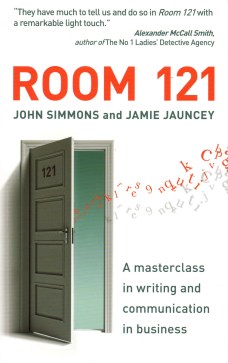
How we need rhythm in our lives. For the last four months, John Simmons and I have been batting back and forth chapters of Room 121 on an almost daily basis (a form of exchange, and therefore of book, it occurs to me, that wouldn’t have been possible before the advent of email). Now, apart from pulling together final details like blurb, biographies, photos and the all-important endorsements, it’s over and I feel as flat as the proverbial pancake – appropriately enough, I suppose, since next Tuesday is Shrove Tuesday.
As it happens, this week has been quiet on the work front, and although I have a list of things to do that’s longer than my arm, I’ve felt tired and listless and have found it difficult to focus. End-of-winter blues, I started telling myself until the penny dropped: I’d got used to a particular rhythm and now it was gone. But it’s not just the routine the rhythm provides that I miss, it’s the energy I derive from it. It’s as if there was a little drummer somewhere inside me, whose beat was pulling me along, helping me to march purposefully down the road. Now he’s not there and all the steam has gone out of my legs (I suppose if you think of legs as pistons that just about works as a metaphor).
He’s not the only rhythm-maker now absent from my life. The newly be-Oscared Aaron Sorkin, writer of The Social Network, has been transporting Sarah and me almost nightly for well over a year with his magisterial West Wing. We watched the final episode a couple of weeks ago with the feeling that we might have been emigrants bidding farewell to a family we’d never see again. The triumphs and tribulations of President Jed Bartlett and his White House inner circle have lodged so deeply in our connubial consciousness that we sometimes found ourselves discussing their dilemmas over dinner as if they were old friends – which, in a way, they became.
These big, beautifully crafted American TV drama series raise storytelling to a new level and I have no doubt we’re the richer for them. Not even Charles Dickens or Victor Hugo were able to exploit their plots or develop their characters on such a scale. These shows answer to our deep thirst for stories, and they serve them up with a long pulse that corresponds more closely to that of our own lives than any other form of narrative except perhaps soap operas.
That said, I’m also now very close to the end of another long cycle, Michelle Paver’s spellbinding sextet of children’s novels The Chronicles of Ancient Darkness. Set in the northern forests of stone-age Europe, these tell of fourteen year-old Torak, his four-footed companion, Wolf, and their battle with the evil Mages who threaten to blight the natural world and the harmony with which the different clans of forest-dwellers inhabit it. As well as spinning an extraordinarily gripping tale, she evokes a lost landscape and way of life with such apparent authenticity that it fills me with yearning and I feel as if the connection with my hunter-gatherer ancestors might have been forged only yesterday, rather than millennia ago. And when Torak and Wolf triumph, as they surely will, possibly on the train on the way to Wales to see my granddaughter tomorrow, another cycle will have come to an end.
But spring is on the way and renewal with it. New cycles will take hold of me. New stories beckon. I’m ready for them.
Tall trees
A twenty-minute walk from my house there’s an eighteenth century pinetum, enfolded in a bend of the River Braan. The Hermitage, as it’s known, was created for the Dukes of Atholl as an extension of the gardens of their second home, nearby Dunkeld House. Complete with a fake hermit’s cave, a deep gorge, and a folly overlooking a fierce waterfall and salmon-leap, the Hermitage provided a dramatic riverside walk for the Atholl family and their visitors.
I know all this partly because it’s on my doorstep, partly because some years ago I wrote the guidebook for the Dukes of Atholl’s principal seat, Blair Castle, twenty miles up the road at Blair Atholl. Usually I forget things in direct proportion to the speed with which I’ve had to assimilate them; but sometimes I’m sufficiently engaged by the subject for some of it to stick. So on this occasion I also know that the fourth Duke of Atholl was known as ‘the planting duke’, and that he propagated acres of hillside with larch by firing seed out of a cannon. His plan was to help keep the British navy afloat, but alas the first ironclad appeared while his little larches were still saplings. Nevertheless, we’re in his debt for much of the magnificent russet and gold that cloaks the Tay valley each autumn.
But more impressive than any larch is the stand of Douglas Firs at the Hermitage. These giants rise up on the riverbank, tall and straight and spacious, like the pillars of an enormous cathedral, and you have to crane your neck to see the canopy. These we owe to David Douglas, another local but from the opposite end of the social spectrum. More or less contemporaneous with the fourth duke, Douglas was the son of a gardener at Scone Palace, home of the Earls of Mansfield, just outside Perth (and I know this because I also wrote the guidebook for Scone Palace – during what I should perhaps now refer to as the ‘heritage phase’ of my career).
One of the earliest and most famous of all plant-hunters, David Douglas was astonishingly tough. He travelled the wilderness of northwest America, frequently alone and on foot, fending off wild animals and hostile natives, climbing unnamed summits and traversing vast tracts of unmapped forest. In one famous incident he calmly records in his journal how he is lying behind a fallen tree, cocked rifle in one hand, knife drawn and resting on the trunk before him, as a war party of Indians advances on him through the trees.
Douglas was responsible not only for bringing home the Douglas Fir but also for a huge number of other common plants that we now take for granted in our gardens. He came to a sticky end, aged thirty-six, in an animal pit that already contained an angry bison. Whether he fell in or was pushed has never been fully ascertained. But he’s on my mind today because yesterday I ran a workshop for staff of the Edinburgh International Book Festival in the David Douglas room at Edinburgh’s Botanical Gardens; and I asked them, in advance, to find out what they could about him. The room is a wonderful first-floor space with handmade furniture in different woods, and three glass walls looking straight out into the trees of the gardens. It seemed appropriate that they should make the link between this botanical hero and the place where we were spending the afternoon.
But the story doesn’t quite end there. I’m writing this on the train home to Dunkeld from Edinburgh, having stayed overnight for a board meeting. In the seat opposite me is a young man who, it transpires, is on his way home to Blair Atholl for the weekend. Now he works in Edinburgh but until a year ago he was a groundsman – at Blair Castle.
Sometime one has the sense of being spun on a wheel whose revolutions are quite beyond one’s imagining.
Three friends
This week I’ve been in London, putting the finishing touches to the book that John Simmons and I have been writing together. Called Room 121, it’s a conversation that takes the form of alternating blog posts, and it will be published in the summer. Although its theme is the way we use language at work, it’s as much about the way we respectively see the world as it is about the craft of writing.
We’ve got to know each other well, John and I, over the last half-dozen years. Along with our partner, Stuart Delves, we’ve taught Dark Angels courses together in Scotland, England, Wales, Spain, Switzerland, Sweden and Poland. We’ve been on a writing retreat in France. Occasionally we’ve even had to share a room. We’re at a stage in our lives where we’re both fairly clear about how we want to focus our energy through the years ahead. Our friendship is rooted in the fact that we not only like each other and enjoy one another’s company, but share an understanding of how the world is shaped by language, and a vision of how that can be used to the good. You could say that we met at an age when our ideals had begun to settle and mature.
In the bigger scheme of my life, however, John is a new friend. Janie I first knew in my early thirties. Late last year, I was amazed and delighted to hear from her again via Facebook. Back in the early Eighties we were both recently married and living in London with young families. We came to know each other through the world of commercial radio, where she worked as a press officer and which I wrote about as a journalist. On Tuesday we caught up for a drink and, despite an absence of nearly three decades, were able to pick up again almost without missing a beat. Naturally, much has happened in our lives, not least the fact that we both have new partners and, in my case, more children, while Janie has made a tremendous career at the BBC. We spent an hour-and-a-half of glorious story-swapping and I left with the warm glow of a connection rekindled.
The previous night in London I had stayed with David, whom I’ve known since childhood and would consider my oldest friend, if not chronologically, at least in the firmness of our friendship. Brought up in rural Scotland, we were the only two boarding-school boys within a wide radius (although we weren’t at the same schools), and we hung out together staunchly throughout our teens. Our lives since have gone in very different directions – David is now a statesmanlike figure on the property scene – and there have been long hiatuses, but each time we meet it takes just a few seconds for the years to fall away as the timbre of his voice, a facial expression here, a quirky little physical movement there, reassert themselves, so familiar, so reassuring that we could easily be teenagers together again.
It’s been a week of friends, three in forty-eight hours (more in fact but I don’t have room here to write about them all), each from a different period in my life. And I realise more and more that these friendships, new, renewed or constant, are among the most precious things we possess because they not only bring us affection and pleasure, but connect us with ourselves; they help to complete the continuously unfolding story we tell ourselves, the story of our lives.
Tagged BBC, friends, friendship, John Simmons, Room 121
1 Comment
Wide knowledge
I’ve been talking to my friend Wenbo Xu again, quizzing him about all things Chinese as I lie face down, bristling with acupuncture needles. I love these conversations. They’ve become a quite unexpected bonus of my regular visits to him. I mumble my questions through the hole in his treatment table and then wait as he frames his reply. English is a difficult language for him. It fills his mouth awkwardly, making him gnaw and chew at it.
This week, with Amy Chua’s highly divisive book, Battle Hymn of the Tiger Mother, making its debut in the UK, we discuss the Chinese approach to parenting and education. The almost fanatical desire for success is a product of the single-child policy, he believes. Six people, two parents and four grandparents, all place their hopes in one child.
Wenbo’s first son, Datong, was eight when they left China. The pressure on children there, the control, was one of the reasons he left, he says. He didn’t want that for his son. (Regular readers of the blog will know that that is just one symptom of the deeper reason for his departure nine years ago: he wished his family to be free, to live in a democracy. See Chinese medicine)
‘And what about when you arrived here?’ He replies that he really noticed the difference, even wondered whether things here had gone too far the other way. ‘So do you think we’re soft in the West?’ ‘Well, the children hardly have any homework!’ He explains that Datong is clever, works hard and gets good reports. He’s top of his class and is going to study medicine, but he probably wouldn’t be at an equivalent level to his cousins in China.
‘But I like that children here can be friends with their parents, they can joke with them. My little boy Luke – he’s two – he calls ‘Daddy, Daddy’ and when I don’t answer he calls me by name. We all laugh. In China that would be shocking. Impossible! My father didn’t speak to me as equal till I had graduated from university and had my job as a doctor.’
Wenbo’s father, I remember from an earlier conversation, had been trained as a teacher and sent off to work in a school in the mountains. He hated it and returned to his village to farm, whereupon he was appointed village teacher. Because of that he was spared re-education under the Cultural Revolution, though not the animosity of some of his neighbours who put up posters denouncing him as an intellectual. Wenbo’s maternal grandfather was not so lucky. He was jailed twice, once in the 1950s, once during the Cultural Revolution in the 1960s, for having been a member of Chiang Kai-Shek’s government. On his second release from jail the villagers denied him entry to his home and sent him to live in a cowshed. Wenbo remembers being present on the day he was given his house back and the villagers returned his furniture.
I ask him about names. He explains that during the Cultural Revolution many children were given names with the prefix Wu, denoting war. It was a revolution driven by words and slogans and Mao wanted an army of bellicose people mobilised by violent language. But Wenbo’s father valued wisdom over bellicosity and in an act of defiance named his children with the prefix Wen, denoting knowledge. Wenbo means ‘wide knowledge’ he explains, then laughs. ‘That too big name for me!’
I leave thinking he’s wrong. How many European doctors do I know who have not only qualified in western medicine but also know where to place an acupuncture needle, how to prescribe herbal remedies and give you a neck massage?
The bridge
Two weeks ago I learnt that my former next-door neighbour, Ian, had committed suicide. He was 50 and he had fought alcohol all his adult life. Yesterday I went to his funeral. During the seven years we shared a garden … Continue reading