Finding one’s voice

What does it mean to ‘find your voice’? It’s one of the reasons you’re here, we often say to our students on Dark Angels courses – to find your voices as writers.

We said it last night, in fact. John and I are back at lovely Highgreen Manor in Northumberland where last year, in March, we spent two days sitting out in our shirtsleeves beneath a hot sun and strangely bare trees.

Now it’s May. The trees are starting to green, but half an hour ago there was a hailstorm. Cradled in its fold in the hills, the place nevertheless feels protected. It’s a safe place and you need to feel safe if you’re looking for your voice, especially in the company of others.

Creating that feeling of safety is a crucial part of what we do. People who are finding their voices must feel that they are not being judged; that they are free to go where their instincts take them without fear of criticism or ridicule. So we work hard to create an atmosphere where that is possible. Our physical surroundings play their part in that.

But then what happens? What does it actually mean to ‘find your voice’? Well, it’s not literal. We’re not working with singers. So to some extent we’re using the word ‘voice’ metaphorically. But either way, it is still about finding something authentic.

This morning we heard people reading out the opening paragraphs of their autobiographies, an exercise we had set them last night. The voices were unique, of course, but it wasn’t so much the sound and the choice of words, as the way in which the writers had, perhaps unwittingly, expressed so much of what they stood for, that really distinguished them from one anther.

To paraphrase Wordsworth, they were speaking themselves truly. I don’t think it would be over-simplifying things to say that they were doing it by concentrating on what they had to say rather than the manner in which they said it. If language is thought given form, then what we call the ‘voice’ is really a manifestation of the way an individual perceives and responds to the world around them. You could say it’s the text rather than the typesetting.

Finding one’s voice as a writer, therefore – or simply as a human being, is more a matter of becoming clear about what one has to say than how one will say it. And that, of course, means knowing who one is and where one is going. No wonder people need to feel safe before they set about articulating that clearly, sometimes for the very first time.

On a different subject, As I Died Lying, our collective novel, which I wrote about last week, has achieved 33% of its required pledges already – a tremendous result. But we’ve still got 66% to go. So do please visit the Unbound website (click here) and take a minute to read the blurb, watch the movie and help us towards the target with a pledge. A copy of this unique literary endeavour will be yours!

Posted in Creativity, Dark Angels, Writing | Tagged , , , | Leave a comment

As I Died Lying

Last autumn, John, Stuart and I, the three Dark Angels (d’archangels as we’ve now been christened by the endlessly inventive Faye Sharpe – see link to the Secret Archaeologist in the blogroll below), had a mad idea.

It was a response to the question What next? from some of our more persistent students – although to call them students suggests something that’s very wide of the mark. They’re all skilled, experienced writers and communicators and they have as much to teach us as we them. But they wanted more Dark Angelry and we felt obliged to come up with something. So the collective novel was conceived.

In February we took ourselves off to Inverness-shire, 14 of us, and spent a chilly weekend in a large house figuring out how to write a book together. I’ve previously posted about it here, mainly in amazement at the collaborative spirit that broke out among us. We left at the end of the weekend with a plot outline and a rough notion of which of the 15 characters (one archangel had hit a snag with his weekend flight plan) was due to appear at which points in the story.

Co-ordination was clearly going to be critical, so the next thing was to appoint a project manager. One of our number duly put her hand up (there might just have been an archangel standing behind her at the time) and Claire Falcon-Windsor was appointed. Everyone approved. You don’t argue with someone with a surname like that.

Now it’s May, Claire’s cracking the whip, and the chapters are starting to come in. Very exciting it is, too. Characters are developing, voices are firming up, and the plot’s advancing nicely. The story is loosely (very, very, very loosely) based on As I Lay Dying, William Faulkner’s southern classic. Our novel, As I Died Lying, also follows the final journey of a dead woman and her family to her chosen resting place. But there all similarities cease – and for the moment I’ll say no more.

I will say, however, that we have a publisher. This is Unbound, founded two years ago by John Mitchinson and friends. John had a distinguished career in publishing before becoming the head of research for QI, where he sets the questions and writes the Quite Interesting books. His new venture, Unbound, relies very effectively on crowd-funding. It’s already had several successes and we’re naturally hoping that As I Died Lying will become another.

So here comes the pitch. For our mad idea to see the light of day, later this year, we need pledges. They can be big or small, but they all count. Once enough people have pledged enough money, Unbound will press the button and we (and hopefully you too) will have a book. If we don’t get enough pledges it will be consigned to the dustbin of publishing history, but we’re not even thinking about that.

There’s everything you need to know about it here – a brilliant short movie, a short sample chapter, a description of how it all came about, and most importantly an invitation to pledge.

So please, Dear Readers, take this in the spirit in which it was intended  – as a brazen plea for you to put your hands in your pockets. In just a few months you could be holding in that same hand a copy of what may be the world’s first collectively written novel. Imagine that.

Posted in Collaboration, Creativity, Dark Angels, Fiction, Stories, Writing | Tagged , , , , , , , | Leave a comment

Sin of omission?

I was listening at lunchtime yesterday to the BBC’s director of human resources being grilled about bullying and the ‘strong undercurrent of fear’ uncovered at the corporation by its recent Respect at Work review. The interviewer suggested that the human resources department was itself complicit, being widely regarded as enforcers and facilitators for management – a charge the HR chief naturally enough dismissed.

This view of HR as the corporate version of the Red Caps is one that’s by no means confined to the BBC, and there’s little doubt in my mind that language has a part to play in it.

Of course large organisations – all organisations – have to have rules and where there are rules there need to be people charged with policing them. But HR has many other functions, including that of ensuring that people enjoy agreeable and conducive working conditions. The problem is that the language of authority and discipline seems to spill over into these other areas of activity, where the damage is compounded by the arcane vocabulary – a weird cocktail of psychobabble and management-speak – peculiar to human resources.

In all the years I’ve worked in business, some of the most incomprehensible gibberish I’ve ever heard has emanated from human resources departments, also some of the most toxic language. Having said that, I have to add that there are many caring, well-intentioned people working in HR, and that I believe this is largely a sin of omission, not commission. But it is nevertheless a sin.

The language we hear is part of the environment we work in, like the temperature of the room or the colour of the carpets. If it’s peremptory and impersonal at best, menacing at worst, it creates an atmosphere which, at best, makes it hard for people to feel engaged, at worst makes them feel they’ve been consigned to some kind of gulag.

I ran a writing programme some years ago for a local authority. When asked to show examples of what they considered to be bad writing, people invariably produced material from the HR department, including letters to staff who were on sick leave (often for reasons of stress) that would have been more than enough, it seemed to me, to push someone in an already fragile state over the edge.

People don’t realise quite what an emotional impact this kind of language has. Just this week we asked staff of a large cultural institution to do the same thing – bring along examples of good and bad business writing. ‘I detest this language,’ said one person, her voice shaking, ‘I truly detest it,’ as she held up a communiqué to the entire staff about something or other from the senior leadership team.

The leadership team in question is almost certainly oblivious to the effects of their utterances. These leaders will never have stopped to consider that their staff may ‘detest’ – a very strong word – the language in which they are spoken to, and that if they do, they are very unlikely to follow their leaders with any enthusiasm.

Someone recently suggested to me that when it comes to modern business-speak the MBA has much to answer for. It’s interesting to note that this much sought-after qualification is a Masters in Business Administration, not in Business Creation or Business Leadership, and certainly not in Business Imagination. The language of the MBA is the language of process. From there, alas, it’s often a short step to the language of coercion and control.

Posted in Business speak, Business writing, Corporate communication, Jargon, Language, Leadership, Management speak | Tagged , , , | 10 Comments

Time out

When I started writing this blog, in August 2009, I might have been quite surprised to learn that I would still be at it nearly four years later. I was certainly surprised to discover how quickly it had become part of the rhythm of my life. I noticed this the first time I missed a week, quite early on. It provoked an unexpected feeling of guilt, along with a strong sense of disruption, of something missing.

Holidays apart, I’ve made a determined effort to write every week since then, however busy or tired I am, and I don’t think I’ve missed more than three weeks in all the nearly four years. Sometimes the regime does feel tyrannical, but I also know that it’s a good exercise in summoning my most present preoccupations and giving voice and form to them without the luxury, or hindrance, of too much forethought.

To my continuing amazement, people seem to find my ruminations entertaining, occasionally even thought-provoking – though, I’m relieved to say, not so much so that anyone takes me to task for going absent without leave, as I did last week.

Last week it was a combination of exhaustion and pressure to prepare for the coming weekend that proved too much. The previous ten days seemed to have involved non-stop workshops and by Thursday evening I knew I didn’t have it in me. I wrestled with myself for a couple of hours, then surrendered, went to the pub and woke up on Friday morning feeling better for it and quite untroubled by any kind of guilt.

It occurred to me, not for the first time, that although we need the constraints of deadlines, processes and benchmarks in our working lives, we also benefit greatly from breaking routines and occasionally taking time out to freewheel. The thought was almost immediately underlined by an email from the chairman of one of the organisations for whom I’d run a workshop the previous week. He particularly appreciated that we’d had no objective for the day, he said, adding that perhaps his team would remember it for having captured what they were trying to do without being too prescriptive.

There had, in fact, been an objective, but it was simply to connect the team with the way they felt about what they did, so that the vision and purpose of the organisation could be articulated in a more emotional and less rational way. And there had also been a result which, I’d like to think, was that people had left with a feeling of renewed energy, creativity and engagement. But it had not been a normal day in the office and there had been no great pressure to justify what we were doing by ‘coming up with something’ at the end of it.

There’s a growing body of evidence that we’re at our most creative when we’re removed from the structures, and strictures, of our habitual routines. Problem-solving is harder within familiar tramlines. Leaps of the imagination are much more likely to occur behind the wheel, or in the shower, or on a walk, than at one’s desk.

And so it also proved over the weekend. Eight brave souls took time out to come on a journey with Sarah, my wife, and me. We spent two days exploring aspects of the stories about ourselves and our families that we carry through life with us. It was, as we predicted, a weekend of telling and listening and reflecting, of laughter and some tears, and above all of connecting with one another. Perhaps its most salient feature was the fact that there was, again, no particular objective. We offered people a path and simply walked with them while they decided where they wanted it to take them.

It’s such a different approach to the one we take so much of the time in our working lives, yet it can produce such worthwhile results. It seems that sometimes time out can be more valuable than time on the clock.

Posted in Creativity, Stories, Storytelling | Leave a comment

The fire in the cave

Earlier this week I spent two days helping run storytelling workshops for the senior leaders of a well-known high street retailer. They’re about to launch a new business plan and they have a lot of information to get across to their several thousand employees. They recognise, to their credit, that a 60-slide PowerPoint deck is not the way to do it. So they brought in The Writer, the agency I periodically work for, to show them how to use stories as another, altogether more effective, way of getting over their messages.

Asking people to stop for a while and think about something they do quite instinctively is always instructive, as much for the trainers as the trainees. We all know that telling stories is one of the most natural of human activities, even those of us who don’t think we do it very well. But start to look at how stories work – at the neuroscience and the psychology, start to think about why one is telling them, and suddenly something that seemed as easy as breathing becomes a lot more complicated.

There’s a process of deconstruction, and the first thing to go is spontaneity as it dawns that the story one used to tell about one thing is not really about that at all. For example, the tale of that dreadful moment when there was a fire in the electrical cupboard and the store was evacuated without incident, is not about seamless teamwork; it’s actually about how the teller came through a particularly tricky situation with flying colours.

As my fellow trainer, Julie, and I discussed over dinner, the first night, all stories are really metaphors. Every story we tell stands for something else, whether we realise it or not. And that moment of dawning for the novice storyteller is usually a simultaneous recognition of several things: the unconsciously self-serving nature of many of the stories we tell, the difficulty of telling a story really well, and the power they have if we tell them properly.

Stories allow us to bring meaning to the world around us. They shine light into the darkness. They are, as Julie said, ‘the fire in the cave’. It’s a wonderful image, and one that brings to mind a film I have watched several times recently, Werner Herzog’s Cave of Forgotten Dreams.

Herzog is granted very limited access to the Chauvet Caves, in the Ardeche. He weaves his own story around the technical difficulties of lighting and filming the interior of the huge cave system, over a very short time, without stepping off the foot-wide metal walkways installed by the French authorities to protect the place. Meanwhile he leads us on a journey to explore the astonishingly beautiful paintings that had remained a secret for more than 30,000 years, until three French scientists stumbled on the cave entrance, just before Christmas 1994.

There are horses snickering in fear at the approach of a pride of cave lions. There are lumbering mammoths and a clash between two woolly rhinos. There’s a strange projection of rock where the head of a bull surmounts human, female genitalia. There are the skulls of huge cave bears. There are soot marks from pine torches on the ceilings, and the sooty handprints of their bearers on the walls. Best of all, in the dust of the cave floor are two sets of prints, the feet of an eight year-old boy and, just behind, the paws of a wolf. Did they travel into the depths of the cave as companions, or as hunter and prey? Or did their journey into the darkness take place thousands of years apart?

Everywhere one looks in the eerily silent chambers there are stories told with breathtaking skill by people taking refuge from the chill of the last ice age, people whose artistry bridges the millennia in an instant. What was their purpose? Of course we don’t really know, but some form of shamanism seems likely, some sense of the porousness of boundaries between human, animal and spirit. And the paintings become more astonishing still when one realises that their creators deliberately used the contours of the rock, along with the flicker of torchlight – the only light available to either painter or viewer in those deep, mysterious places, to give them movement and bring them alive.

A thousand generations ago, those artists lit a flame that burns on in our imaginations to this day. That’s what businesses now want to tap into. The fire in the cave.

Posted in Business stories, Creativity, Stories, Storytelling | Tagged , , | Leave a comment

Down the rabbit hole

I’ve been walking round the river at the end of a long day, wondering what to write about. It’s a still, clear evening and the water’s low for the time of year. Normally we’d be expecting the stormy weather that comes with the lambing, and the Tay would be roaring. But thanks to the recent prolonged cold, dry spell, it’s not.

The trees are still leafless, and across the water is Eastwood House, where Beatrix Potter stayed as a young woman and wrote the Tale of Peter Rabbit in a letter to the children of a former governess. Every time I look at the walled garden, sprawled along the opposite bank, I think of Mr McGregor chasing Peter out of the lettuces.

But today I had rabbitry of a different kind in mind. I’ll be at Merton College, Oxford this time next week with my partners, John and Stuart, running the third Dark Angels masterclass. One of the tasks we set everyone, including ourselves, in advance of the course, is to read a novel that has an Oxford connection, then write a piece of dry financial services literature in the style of that book. In previous years I’ve drawn Zuleika Dobson and Three Men In A Boat. This year I drew Alice in Wonderland.

It’s a wonderful exercise in rendering absurd the pompous, self-congratulatory waffle that pours forth daily from banks and building societies and other financial institutions the length and breadth of the land. With the Cheshire Cat and the Caterpillar, the Mad Hatter and the Queen of Hearts, the Gryphon and the Mock Turtle to hand, the scope for comic surrealism is boundless. I’m looking forward to writing it this weekend before I set off.

Were they not so alarming there would be something almost as comically surreal about the images we’ve been seeing from Pyongyang this week. Watching the grimacing young leader, spluttering newscasters and goose-stepping soldiers is like having disappeared down another rabbit hole, of an altogether more sinister kind. And then, in the very week that the North Korean nuclear sabre is being rattled more loudly than ever, David Cameron chooses to visit Faslane and make his defence of Trident – a deterrent which, at least according to the SNP, the great majority of Scots feel they never asked for and can’t wait to be rid of.

And so, via rabbits and rabbit holes, I seem to have ended up where I started last week – the Independence question, which gives me the opportunity to respond to Steve Rawson who commented on last week’s post. That the economic question is not the right one to be asking, I agree. Independence would be for a long time; economic forecasting is accurate for a few months at best, and whatever the great oil carve-up might produce, Scotland would still be better off than practically any other country that has ever struck out on its own.

But on the question of kinship, I disagree. To paraphrase, Steve suggested that if Scots and English feel they are kin, they should stick together. The theme for this blog, A Few Kind Words, has its roots in that same place, of kindness in its original sense of being kin, or of the same kind. I’m all for the benefits of kinship, and kindness, and hope that sentiment would persist whatever happens in 18 months’ time. But when it comes to it I don’t let my kin determine my life choices.

Posted in Business speak, Dark Angels, Scotland | Tagged , , , , , | 3 Comments

Small nation

I sat next to our local MSP at a dinner on Wednesday night. It was a fund-raiser for the upkeep of Dunkeld Cathedral, just across the river from where I live. The MSP happens to be John Swinney, Scotland’s Finance Secretary. He’s charming and modest, a man of deep conviction and, for all his high office, a good servant of his constituency. I couldn’t help wondering how often George Osborne’s constituents find themselves sitting next to their MP at local events.

We had the inevitable conversation, during which he seemed quietly confident that things are not as the pollsters portray them, citing the SNP landslide in 2011 as evidence of the fact that people often don’t reveal, or perhaps even know, their real intentions until polling day. He was certainly in the right place to make such an assertion: on that occasion the SNP took 61 per cent of the vote in our area.

He also spoke with satisfaction of the findings of the Fiscal Commission, the four wise men, including Nobel prize-winning economist Joseph Stiglitz, who have pronounced that by international standards Scotland is a wealthy and productive country, and that there’s no doubt it has the potential to be a successful independent nation.

Which is all very well if you’re happy to be relegated to the international standing of a country like Denmark, exposed to the vagaries of an economy one-tenth of the size of the UK’s, and susceptible to the internal divisions that may arise once the focus of opposition no longer lies across the Tweed. So run some of the counter-arguments. And so the debate will continue for the next 18 months.

I’m neither a politician nor an economist, and I know that each side will deploy the figures and arguments that best serve its cause. As one of the great uninformed, I tend to be swayed by the last convincing argument I’ve heard. But on this occasion, I find myself reacting on a more visceral level.

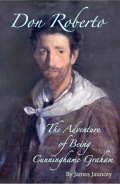
Perhaps it’s something hereditary: my great-great-uncle, RB Cunninghame Graham, about whom I’ve written before, was a Scottish laird of ancient lineage who first, along with Keir Hardie, pioneered socialism in Britain and was a founder of the British Labour Party; then became President of the Scottish Home Rule Association, in 1928, and finally Honorary President of the Scottish National Party, when it was formed in 1934.

His views at the time included the notion that Scotland is “a distinctive nation” which suffers from being “a mere appendage to the predominant partner.” “We want a renaissance,” he went on, “a re-birth of Scottish literature, art and sentiment. We can only induce these things by agitating for national self-government.”

Today he might have expressed it slightly differently, using terms such as ‘culture’ and ‘identity’. But this is the level on which I respond and, semantics aside, feel myself drawn by a momentous sense of possibility. While, like most Scots I know, I have absolutely no reason to hold anything against the ‘predominant partner’, I can’t ignore the fact that Scotland is a very different place to England in so many ways – economically, socially, culturally, internationally; and the chance for it to reassert that difference, freely and wholeheartedly, to walk in the world as a fully self-determining, sovereign nation seems to me to represent the greatest and most thrilling opportunity of our lifetimes.

Since returning to Scotland in 1990, I’ve been acutely aware of the bad story that continues to infect the Scottish psyche, the story of military defeat and occupation, of clearance and emigration, of poverty and dependency, of industrial decline and low economic output, of sectarianism, alcoholism, chronic bad health and sporting failure.

Of course, that story is less than half of it, and it’s only about the last 300 years, the period of political union. But for too long it has had a disproportionate hold on people. As someone who’s generally preoccupied with the power of stories, I can’t help thinking that independence would allow us to start telling a new story, in a way that would be profoundly energising, liberating and esteem-giving – with all the material benefits that would consequently flow. Certainly the idea that Scotland, alone of small countries in Europe, should be incapable of managing its own affairs, seems far-fetched.

I have no intention of following my great-great-uncle into politics, but perhaps what I have inherited is his romanticism; as well as being a politician he was also a dreamer, an adventurer and incurable champion of underdogs. As time goes on I realise that this for me is deeply, perhaps even irrationally, a matter of the heart. And I know I’m not alone. According to my dinner companion, even the normally imperturbable Deputy First Minister, Nicola Sturgeon, was ‘in pieces’ at the formal signing of the treaty which sets the referendum date, last week in Edinburgh.

Whatever one may think, this is an extraordinary moment in which to be living in Scotland. The world will be watching us.

Posted in Scotland, Stories | Tagged , , , , | 2 Comments