
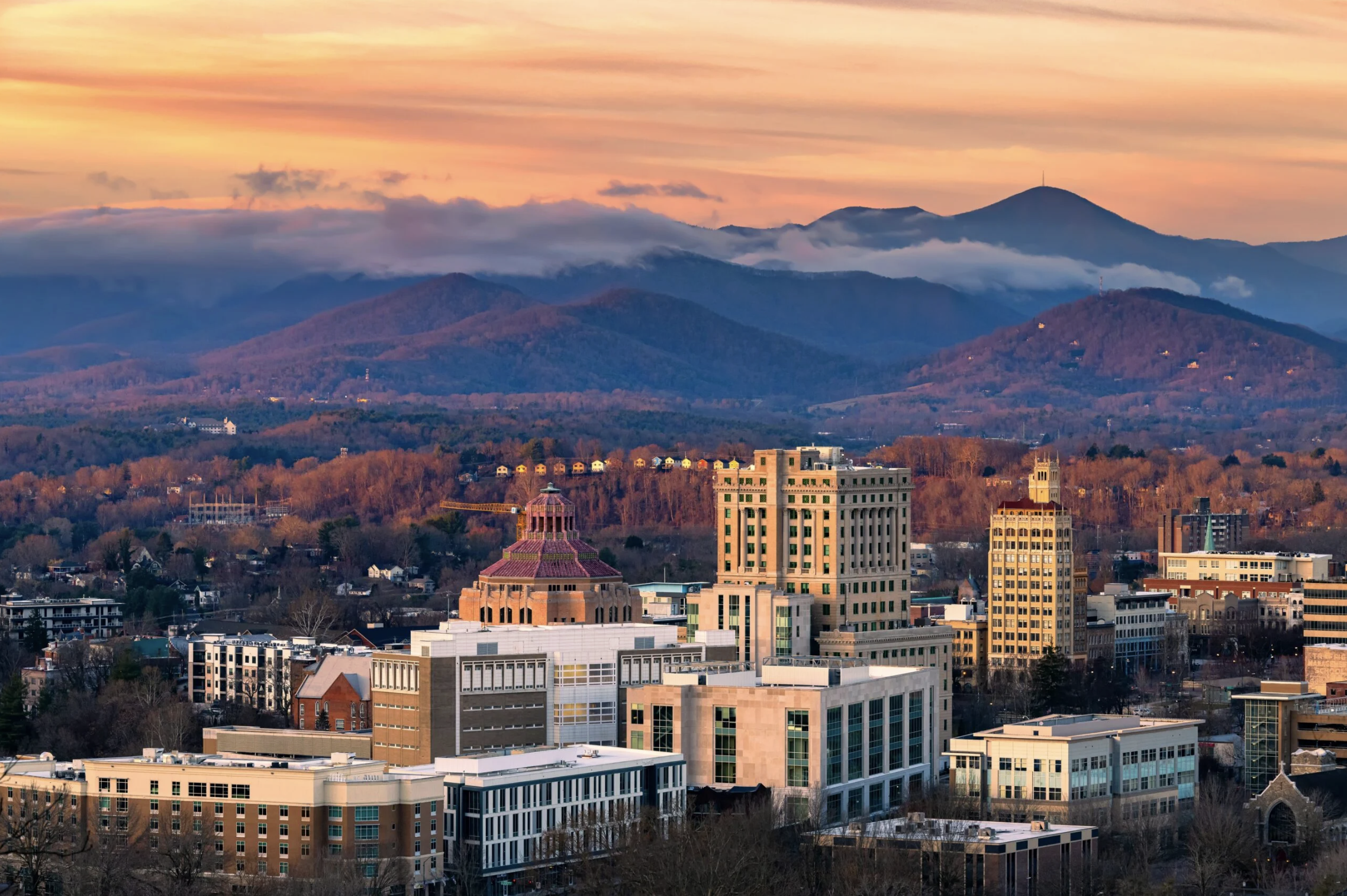
In a city centre park in Asheville, North Carolina, there is a signpost with markers indicating six Sister Cities around the world. One of these points to Dunkeld and Birnam (3808 miles). I live there. Dunkeld and Birnam is not a city. It is barely a town. It is two small communities straddling the River Tay, combined population 1500. Asheville’s population is 95,000.
This unlikely twinning came to pass in 2017, the fruit of five years’ conversation between the two communities. Much of the credit this side of the Atlantic goes to my neighbour three doors down, Fiona Ritchie, who for forty years, from a tiny studio in Dunkeld, presented NPR’s The Thistle & Shamrock, the most listened-to Celtic music radio programme in the United States.
As a student at Stirling University in the late 1970s, Fiona spent a semester in North Carolina and later worked for a local radio station there. She has since spent much time in Asheville and knows both communities, and their similarities, well.
With wooded hillsides and large rivers, the Tay and the French Broad respectively, both are popular outdoor destinations. Both have a strong focus on the stewardship of nature. Both are vibrant centres for culture and the arts, with a particular emphasis on the music which has travelled back and forth between Scotland and the United States over several centuries.
Many people from the Southern Appalachians are of Scottish heritage and the Presbyterian church is common to both communities. Their ministers came together to hold joint online services during the pandemic. Following the devastation wrought on North Carolina by Hurricane Helene in 2024, Dunkeld and Birnam folk mounted an Asheville flood relief campaign, and gave generously.
Asheville has also recently opened a Climate Café, an environmental initiative launched by another neighbour, Jess Pepper. In the space of a decade, Jess has built Climate Café from a cosy drop-in in a Birnam café to a global network of several hundred meeting places on six continents, where concerned people can gather to share ideas, information and get involved in climate action.
And there are more joint events between Asheville and Dunkeld and Birnam: a Burns Supper, for example, more links through tourism, the Tartan Day celebrations, musical performances and so on. This, I am beginning to understand, is what twinning is about: exchange, connection, support, simple human warmth between people of different places and cultures.
Nothing, or I should say no one, embodies that spirit better than Asheville resident and our first Dunkeld and Birnam writer-in-residence, Elizabeth Kostova. Elizabeth is an American writer whose 2005 debut novel, The Historian, made history (appropriately enough) by going straight to number one on the New York Times besteller list in its first week of sales.
She is now almost halfway through her two-month residency here, and is already a well kent figure in the village with her bright yellow down jacket and walking pole. She has been busy in the community giving talks and workshops, visiting schools, sharing time with other local writers, and conducting her own research around the theme of our life-giving river, the Tay.
Shortly after she arrived, there was a welcome party for her in the former Post Office, now turned café, a hundred yards from my house. I work there most mornings. Now the tables were cleared away, drinks laid out, the space transformed for an evening reception. There was a good turnout, fifty or more people. Fiona offered some words of explanation about Asheville, the twinning and the residency, then introduced our guest.
Elizabeth is softly spoken, thoughtful and courteous, with a generous smile and a quietly radiating warmth. After a few opening remarks, she began to talk about America. She spoke about her horror, her shame and sorrow, at what is happening there, and about her gratitude to the many people here, she said, who had already offered their sympathy and solidarity.
It was a moment of intense sincerity and vulnerability, and there was a palpable change of mood in the room. It felt as if fifty hearts had opened and the entire room was gathering in to envelop her in welcome. In that moment we were friends not only of Elizabeth, but of Asheville and every other beleaguered, liberal-minded community in the United States.
It was a powerful feeling, and one well worth hanging onto in these days of division and hatred.





 A Few Kind Words
We had friends who lived in Ashville and visited them. A very hospitable place and the merest inkling of a Scottish accent gets you a gold star!
LikeLiked by 1 person
Very interesting article. The fear expressed by opponents of independence is that an independent Scotland would sink into provincialism, as happened with Ireland in the days of De Valera (Not now!). It is good to be reminded, or indeed informed, of such internationalist initiatives as this one.
LikeLiked by 1 person
Ah, Asheville. I know it well and it’s close to my heart. My mother lived there until she died in 2015 and my best friend from university lives there now. I visit often. It’s a very special place – as, it sounds, is Dunkeld and Birnham! On the list for future wanderings 😊
LikeLiked by 1 person
Come and see us Heather!
LikeLike