
It’s been a strange couple of weeks. I know we’re past the equinox, but it feels as if we’re still under its influence. It’s a time of balance between light and darkness, but often also a time of meteorological chaos.
On Easter Day we had an egg-hunt for the grandchildren in a blizzard, with snowflakes the size of bottletops. Half an hour later we were in brilliant sunshine. And that remains the pattern – if now, mercifully, without the snow.
It’s not a bad metaphor for the global state of things: the light struggling to overcome the dark while violent energies swirl all around, though without nature’s guarantee that the light will prevail. Conflict is in the air and I’m sure we are all, to a greater or lesser extent, affected by it.
Later today we’re going to Orkney for a long weekend. We’ve never been before but have always wanted to go. ‘Magical’ is the word we have heard most often from people who know it.
We’re neither of us feeling particularly well, with lingering end-of-winter colds and stomach bugs. We’re trusting that the change will put us right. It will be a big one, from our riverside village, nestled in the wooded hills of Highland Perthshire to the treeless, windswept land- and seascapes of the Northern Isles.
It will also bring us a little closer to the memory of a different conflict, but one which has been preoccupying me lately.
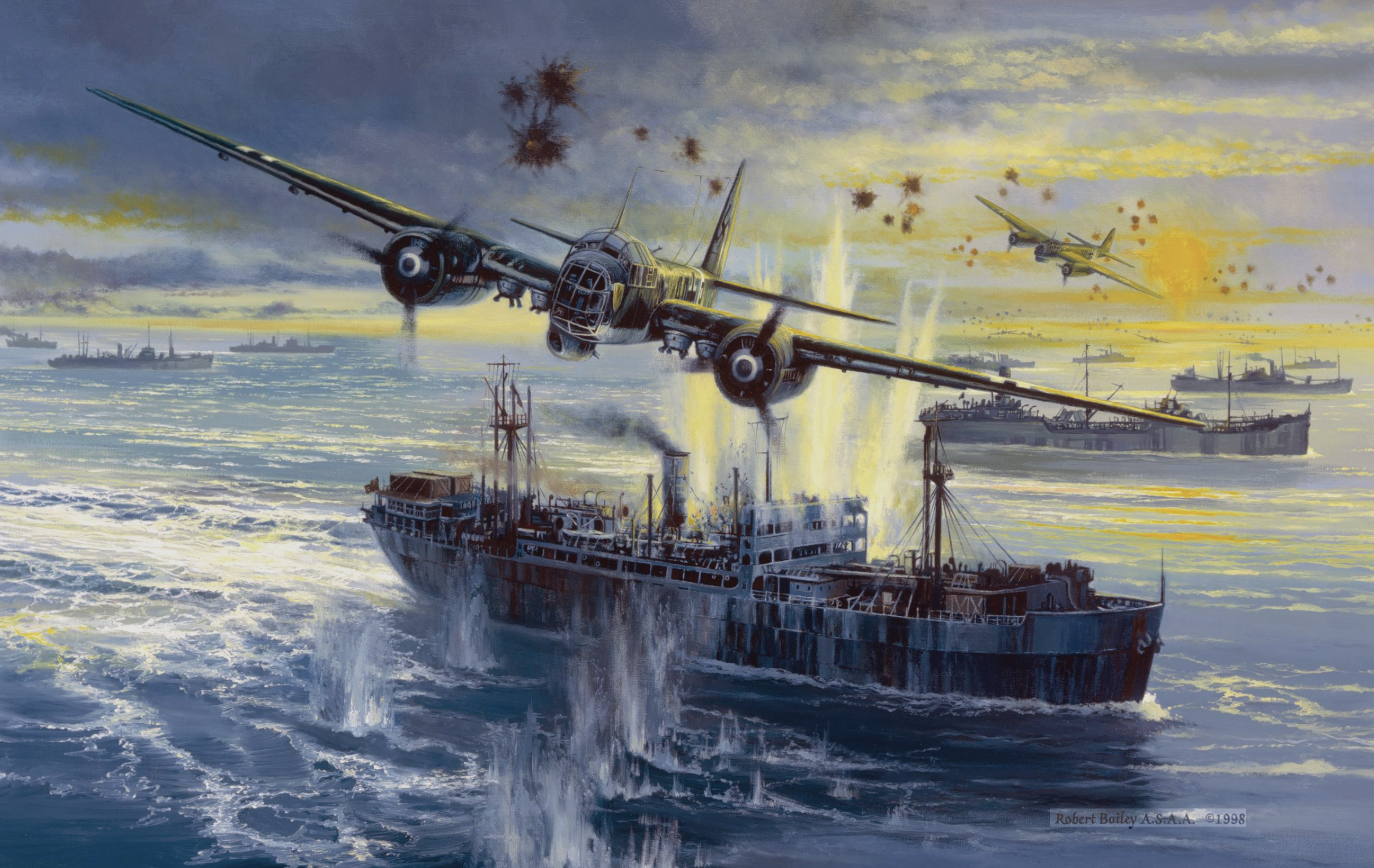
On our way to Kirkwall from the ferry landing this evening, we’ll drive round the eastern edge of Scapa Flow, the great natural harbour where the North Atlantic fleet gathered, along with the arctic convoys it would protect, during World War Two.
This is where, in 1942, my paternal grandfather arrived in command of the anti-aircraft ship HMS Palomares. She was to be part of the escort for the ill-fated convoy PQ17, which would prove to be one of the most disastrous naval episodes of the entire war.
I’ve told the story previously in two consecutive short posts, here and here. I wrote those more than a decade ago, and I had not thought much more about the affair until I was contacted a couple of years ago by the historian Hugh Sebag-Montefiore, who was writing a book about the convoys and asked for a photograph of my grandfather.
We remained in touch and a few weeks ago he kindly sent me a copy of his book. Battle of the Arctic is a spectacular, 800-page account of the nearly eighty convoys which, between 1941 and 1945, carried armaments to Russia as they undertook what Winston Churchill described as ‘the worst journey in the world’.
The book’s blow-by-blow account of convoy PQ17 brought back to me the horror of the episode and the controversy surrounding it. On the basis of faulty intelligence about German naval activity, the First Sea Lord, who was suffering from a brain tumour, ordered the heavy escort of cruisers to withdraw from the convoy, and the convoy to scatter.
The commander of the lighter destroyers, believing the German surface threat to be imminent, offered to accompany the cruiser force and ordered the remaining ships of the escort to proceed to Russia ‘independently’.
This left my grandfather as the senior officer in command of what remained of the escort. In the hours and days that followed, twenty-four out of thirty-five of the merchant ships were sunk, with the loss of 135 lives and thousands of tonnes of materiel.
I knew most of this already. What I had not expected, and was momentarily stung by, was a resurfacing of the suggestion that my grandfather had had a role to play in the controversy. I knew that, according to my father, he had been defamed in an earlier account of the disaster by the revisionist historian and Holocaust-denier, David Irving.
But that account had been the subject of a successful libel action in 1970 by the commander of the destroyers, Jack Broome, who had received the highest damages ever awarded by an English court, including a very large sum in punitive damages. As far as my father was concerned, his father had been fully exonerated by association.
But here was Hugh Sebag-Montefiore examining the sequence of orders that led to the disaster in minute detail, exposing the ambiguity of Broome’s order and, without apportioning blame, coming to the perfectly reasonable conclusion that different people could have, and did, choose to interpret it in different ways.
The inference is that my grandfather, then aged 53 and called out of retirement to serve again, had taken the order in question, to ‘proceed independently’, literally; and that that had, perhaps, resulted in a worse outcome for the merchant ships. But worse than … what?
Hugh was kind enough to ring and we spoke at length a couple of evenings ago. I took from our conversation that the alternative might have been for my grandfather to proceed in closer proximity to the small group of merchant ships he had previously been guarding, but at greater risk to his own ship and possibly to the whole group.
There is no answer here, and no real question of culpability – at least not at my grandfather’s level in the chain of command. In the event, he was decorated for bravery in leading the surviving merchant ships from the island of Novaya Zemlya, where they had taken refuge, to safety in the Russian port of Archangel, while under relentless attack by enemy aircraft and submarines.
Family stories are complicated and can be unreliable. My father was loyal to his father. There’s a telling photograph of the two of them together outside Buckingham Palace, in 1945, after the investiture. I knew my grandfather when I was a small boy, although he died of cancer when I was just nine, and I have never doubted my father’s version of what happened: that Grampa Jauncey acted properly and bravely.
But neither can I deny that another man might have interpreted that order differently, with a different outcome. It’s not only the meaning of orders that becomes confused in the fog of war.





 A Few Kind Words
Another typically gripping blog, Jamie. What I particularly admired about it is the compassionate and honest way you convey this fascinating, tragic episode. A poignant reminder of the ambiguity of words or in this case a word.
LikeLiked by 1 person
Thanks Johnny. If you have a moment to read the couple of (linked) posts that tell the actual story, it’s worth it. What they endured on those convoys, in 24-hour daylight, under constant attack, negotiating pack ice, keeping the ships ice-free so they didn’t literally keel over from the weight, in waters that killed you within two minutes of immersion – is almost impossible to imagine
LikeLike
Normally I would regard such a tale as interesting and intriguing, but there is such a depth of feeling in your writing that raises it to a different level. Very moving.
When I was a boy (many years ago) I remember reading Alistair MacLean’s H M S Ulysses on the Russian convoys.
LikeLiked by 1 person
Thank you, Joe – I remember it too, it was very gripping.
LikeLike