Christmas shopping

I’m conscious that I ended last week’s post on a negative generalisation, making the point that in the world of business, bad writing so often puts paid to good ideas.

But precisely because so much of it is so poor, it’s all too easy to dismiss the genre completely; when in fact there are plenty of individuals in the world of business who write extremely well, and a small but growing number of organisations that really understand the value of language.

Seeking to redress the balance, I went Christmas shopping today with my eyes peeled for good examples. Since my first port of call happened to be John Lewis, I didn’t have to wait very long. The famous slogan ‘Never knowingly undersold’, and the accompanying pledge to refund the difference if you find the same item cheaper elsewhere, have stood the store in good stead for nearly 85 years.

‘At John Lewis we don’t just define value by price,’ they say. ‘Though our prices are some of the most competitive on the high street, we also offer incredible value in the quality of our products, as well as our expert, highly professional service.’

The thing is, it’s all true. And we believe it partly because the experience of shopping in the store confirms it; partly because it chimes with everything we know about the business ethos of the John Lewis Partnership (whose 67,000 ‘partners’ received a bonus for 2007/8 worth 20% of their gross salaries).

John Lewis’s signage and leaflets are brilliantly written because the language they use is simple, direct and, above all, honest. It’s an organisation whose voice is in harmony with its head and its heart. That makes for compelling communication.

Tagged , , , , , | 1 Comment

Advanced magic

The visionary Arthur C Clarke once said, ‘Any sufficiently advanced technology is indistinguishable from magic.’ I spent an intriguing day this week in the presence of just such magic, at the Informatics Department of Edinburgh University.

Informatics is the science of information and information processing. If that sounds dry, picture a lab festooned with cameras and microphones which record every word uttered and every movement made by each member of any group that gathers there – essentially an intelligent meeting room that can capture the discussions and interactions that take place in it, and analyse them by practically any set of criteria you care to think of.

Alternatively, imagine a table top which is also a multi-touch screen from which you and the other people sitting around it can individually summon information or entertainment, share knowledge and communicate, or even play a game together, all by lightly pressing the glass in front of you.

A small, curious group of us were there as token consumers to brainstorm possible commercial applications for these technologies. We hadn’t the faintest idea how they worked, and to that extent they were magic; the things they were capable of doing seemed miraculous.

It struck me that good writing can also seem miraculous in its ability to touch the heart and stir the soul, enliven the mind and ignite the imagination. Yet, effortless and transparent as it might appear, it’s similarly underpinned by the application of, in this case, a finely honed craft rather than technology, to an idea that has germinated in the fertile recesses of someone’s brain.

And when the craft, like the technology, is not sufficiently well developed the idea itself is likely to wither – as, sadly, business writing all too often demonstrates.

Tagged , , , , , , | Leave a comment

Goethe got it

I sometimes work in my local library, the AK Bell in Perth. On the walls of its café are quotations about literature and writing from famous literary figures. There’s one by Goethe that often catches my eye: ‘When ideas fail, words come in very handy.’

The first time I saw it I was confused. What are words if not the expression of ideas? But then I started to think about an exercise that’s well known to teachers of creative writing, and that we often use with business writers too.

Sometimes known as automatic writing (though I avoid the expression – it makes me think of séances), it involves writing continuously, in longhand, on a given subject for three or four minutes.

At its best it produces a stream of consciousness, unfettered by the remembrance of rules or the anticipation of readership; and the results are often surprising, because Goethe was right – the simple act of putting words down on the page, one after the other, fast and with as little thought as possible, becomes a kind of lubricant for the imagination.

It can work on a purely personal level, unlocking memories and emotions, but it can also work creatively as a way of getting at trapped or unrealised ideas. And in the world of work, where the prospect of a report, or even an email, can sometimes seem impossibly daunting, five minutes letting your thoughts flow freely onto paper, safe in the knowledge that no one else will read them, can be a wonderful way of priming the creative, or even simply the narrative, pump.

Next time you’re stuck, try it.

On the subject of Goethe, and à propos last week’s posting about constraints, Tessa Ransford, founder of the Scottish Poetry Library, sent me her splendid translation of Goethe’s Natur und Kunst. Click here to read it and the original.

Tagged , , , , , , | 1 Comment

Creative constraints

I listened to an intriguing programme on Radio Four yesterday while driving south down the M6 in horizontal rain. Presented by the miscellaneous Ben Schott, it documented the Oulipo movement, one of whose members, Georges Perec, famously wrote a novel from which the letter ‘e’ was entirely absent – a so-called lipogram.

Founded in France in the 1960s, the Ouvroir de Littérature Potentielle held as its central philosophical plank the notion that constraints encourage enjoyment and creativity. So Perec’s experiment was true to its aims, as were those of the members who wrote sonnets with interchangeable lines, palindromic poems and, the one I liked best, texts in which each noun was substituted with the one that came seven entries after it in the dictionary – with particularly hilarious results when applied to the opening sentence of the Book of Genesis.

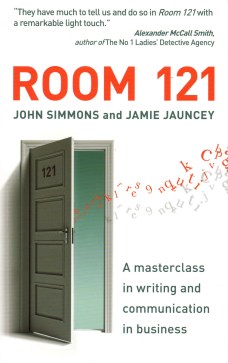
The creative value of constraint is a theme that my friend and fellow writer John Simmons has regularly explored, most recently in 26 ways of looking at a Blackberry (A&C Black, £9.99), in which he challenges himself to rewrite a piece of bland corporate text in 26 different ways ranging from a fairy tale to a presidential speech, a text message to a song lyric. The point is not so much to improve on the original but to show how the strictures of different forms can make you think harder about what you’re saying and bring life to dull expression or tired ideas.

At work we may not choose to experiment like the Oulipo writers but we do face constraints all the time in the form of deadlines, word counts, specific audiences to be addressed, themes to be followed or arguments to be made. And they can help us to be more creative simply by forcing us to focus and direct our energy; while the alternative, the blank page, can be paralysing in its very lack of boundaries.

Tagged , , , , , , | 1 Comment

Healing talk

Six months ago I ran a workshop for a group of doctors, healthcare workers and former cancer patients. The object was to consider how to improve the quality of information that people receive at different stages along the cancer ‘journey’.

We looked at examples which ranged from the very informative to the virtually unintelligible, the simple to the terrifying. The one thing that many of them had in common was a tendency to speak in the clinical, rather peremptory, often condescending and largely masculine language of the consultant physician. What an equally large number lacked was any kind of empathy.

Yesterday, I received an email from one of the workshop participants, an oncologist, enclosing a copy of a leaflet that she and her team had subsequently written ‘in a very different style from the one it would have been without your input’.

It was clear, direct, warm, empathetic, authoritative, helpful, respectful. It treated the readers as human beings, it subtly acknowledged their predicament, and it spoke to them as equals. I simply couldn’t fault it and I don’t mind admitting that it made me feel immensely proud.

The NHS has mountainous lessons to learn about language, as anyone will know who has ever been summoned to a hospital appointment (‘you are required to attend …’), let alone been handed a ‘patient information’ leaflet on any subject.

And the starting point, the absolute foundation of any learning, is that language can, should, must be part of the healing process. As my oncologist friend so beautifully demonstrated, it just takes a little imagination, a bit of graft, and the will to connect. The opposite doesn’t really bear thinking about.

Tagged , , , , , | 3 Comments

Significant detail

In need of escape I recently read Stieg Larsson’s The Girl With A Dragon Tattoo. It’s a long time since I’ve read a thriller and it took me a little while to get used to the style – the reportage and long passages of exposition. Once I did, I was hooked. The story is utterly gripping, twists like an eel, and is cleverly rooted in a social issue that few people could take exception to – the abuse of women.

But there was one thing that grated throughout, and that was the naming of brands; not Fleming-like exotica – cocktails, wrist-watches, sports cars – but the terminally mundane such as second-hand cars and computer software.

Irrelevant detail with a weird, faintly macho whiff about it, this did nothing for plot, characterisation or colour. It was a world away from the significant detail that illuminates good writing by lending plausibility, emotional weight, shades of definition.

I once interviewed an old fiddle-maker who showed me a caliper he’d made from the metal heel of his boot, a piece of an old steel ruler, a welding rod and the top of a tube of eye ointment. Writers dream of that kind of information because it’s impossible to make up.

But businesses have trouble distinguishing between the two. So often business literature is full of information the reader really doesn’t need. Project names, department names, job titles – these are the equivalents of Larsson’s Volvos; while the significant detail that would really bring the writing to life is nowhere to be seen.

Once again it’s down to being able to make the imaginative leap of being both writer and reader simultaneously, something that even the most successful thriller-writers, let alone business writers, often fail to manage.

Tagged , , , , , , | 2 Comments

Warren, Doris and Bertie

Warren Buffett (profiled by Evan Davis on BBC2 last Monday) was the world’s richest man until his chum Bill Gates knocked him off the perch. Even so, he remains the world’s most successful investor. Previously known as ‘the sage of Omaha’, he is now revered as the ‘oracle of Omaha’, so good is his investment record.

But prodigious wealth, and a fondness for bridge, are where the similarities between the two end. Gates, the über-nerd, controls a vast and glossy empire from Microsoft’s sculpted headquarters outside Seattle. Buffett, the hayseed from the heart of the mid-west, makes his decisions from Berkshire Hathaway’s scruffy office in downtown Omaha, Nebraska.

Buffett doesn’t buy fashionable companies, only those that are well managed. He has never bought a technology stock because he doesn’t understand the business. He owns a modest suburban house and drives a second-hand car. His company website looks like a first-year design project, while the Berkshire Hathaway AGM has all the sophistication of a country fayre, where 30,000 adoring shareholders come to eat ice cream, drink cherry coke and sit at the feet of their guru.

For all the homespun veneer, Buffett in his own way is probably just as much of a nerd as Gates – undoubtedly brilliant, probably a little autistic, certainly obsessive-compulsive. But there’s one thing he has mastered, which is plain speaking. In 1998, such is his standing in the investment world, he was invited to write a preface to the US Security and Exchange Commission’s Plain English Handbook. He concluded with this ‘one unoriginal but useful tip’:

‘Write with a specific person in mind. When writing Berkshire Hathaway’s annual report, I pretend that I’m talking to my sisters. I have no trouble picturing them: Though highly intelligent, they are not experts in accounting or finance. They will understand plain English, but jargon may puzzle them. My goal is simply to give them the information I would wish them to supply me if our positions were reversed. To succeed, I don’t need to be Shakespeare; I must, though, have a sincere desire to inform. No siblings to write to? Borrow mine: Just begin with “Dear Doris and Bertie.”’

For that alone he gets my vote. If you have a moment, look at Warren Buffett’s Letters to Berkshire Shareholders, especially the letter for 2008 when the recession started to bite. There is nothing else like them.

Tagged , , , , , , | 1 Comment

Heat, dust and truth

We took off from Jodhpur at 2.45pm on Tuesday and climbed, rather slowly it seemed, over the Rajasthani desert on the first leg of our journey home to Scotland. After fifteen minutes, and five thousand feet at best, there came … Continue reading

More Galleries | Tagged , , , , , , | Leave a comment

The train now arriving …

4.30 am. After five days in the mountains we have spent the last seven hours trying to snatch sleep as the train rattles and sways down from the north. Now a lady with a singsong voice and cut-glass diction comes … Continue reading

More Galleries | Tagged , , , , , , | 1 Comment

Indian autumn

It’s one of the great clichés of travel-writing that India is an assault on the senses, but stepping outside the terminal building at Delhi airport, I’m lost for any other way to describe the experience of arriving in the sub-continent. … Continue reading

More Galleries | Tagged , , , , , , | 2 Comments