
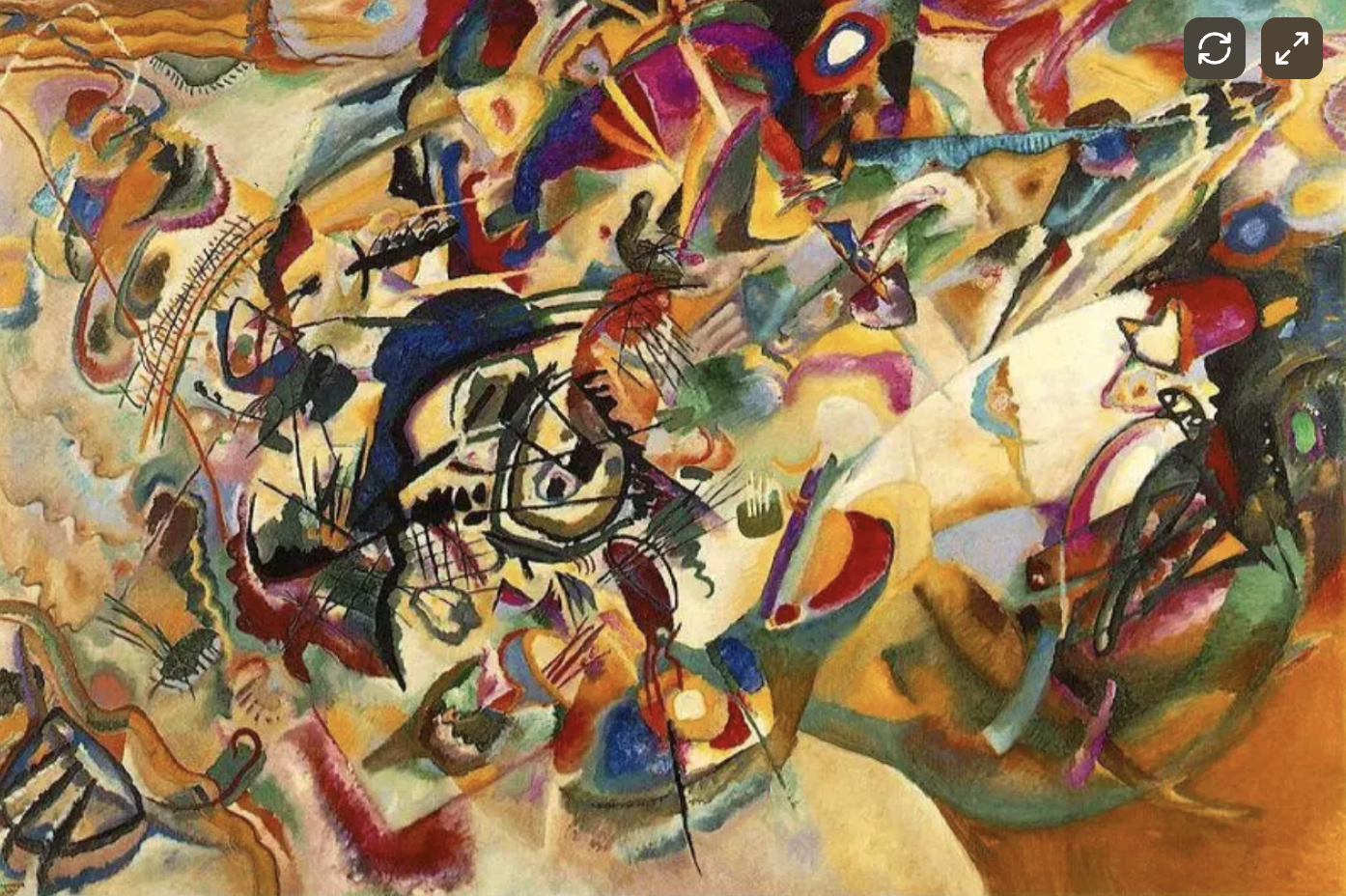
It was not until I was in my twenties that I realised that not everyone had colours for numbers, letters and some words. What I mean by that is that in my mind’s eye the number 3, for example, is vibrant green, the letter C is pale yellow, the word Tuesday is dark blue. As well as days of the week, I have colours for months of the year and for certain proper nouns, mostly people’s names and place names. The colours are always the same.
I had assumed this was the norm, but no. It was definitely not. There was even a word for it: synaesthesia. But since it seemed to make no material difference to the way I led my life, I simply forgot about it.
Twenty years ago my interest was aroused again by a chance conversation with a graphic designer friend, also a synaesthete it transpired. I discovered a little more about the condition and learnt that it was a kind of cross-wiring of the brain in which the number/letter/word-to-colour association is the most common form, but that there are many other variations: for some people music triggers colours, for some words trigger taste, for others smells trigger shape, and so on.
I also learnt that relatively little was yet known about it. There was a small research unit at the University of Sussex, and closer to home for me, a neuropsychologist, Julia Simner, conducting a study at the University of Edinburgh. I got in touch with her and with her help put together a questionnaire which I circulated to members of the writers’ collective 26. Apart from satisfying our curiosity, my designer friend and I thought that some kind of creative project might emerge from the findings.
Roughly half of the thirty people who responded claimed to have some experience of synaesthesia, some more convincingly than others, but despite Julia’s help, our method was not very scientific and there was a general so-what-ishness to the responses; no one was able to point to any particular personal benefit to the phenomenon, and we couldn’t see how to make anything of it creatively. Yet again, I forgot about it.
Then, last week, who should pop up on BBC Radio 4’s The Life Scientific but Julia Simner, now Professor Julia Simner of the University of Sussex’s Multisense lab. Her research into how our brains experience the world of the senses had progressed significantly since the early 2000s, and what she had to say was fascinating.
In babies there is much greater general connectivity between different parts of the brain than in adults. Likening this to a railway network, it seems that as we grow and develop there’s a kind of Beeching effect as branch lines are closed, direct local connections fall away, and the remaining routes converge on much larger hubs.
But in the case of synaesthetes, this clumping doesn’t occur to the same extent and the direct connections remain open to a much greater degree. Which explains why, for the synaesthete, the different sensory centres in the brain – for colour, spatial awareness, taste, smell etc – remain more closely linked.
If that explains the mechanics of synaesthesia – the how, we’re still left with the why. What’s the point of this ‘cross-wiring’? What evolutionary benefit could it confer? A great deal, it seems. Child synaesthetes in Julia’s studies have significantly better vocabulary, better spatial processing, and better memory for numbers. They score higher in creativity, and have better colour perception and colour memory. As an early homo sapiens, Julia suggests, you would want to be able to spot the bush with the berries and remember where it was.
What does it change for me, knowing this? Nothing very much, really. Her studies show that synaesthesia is a lot more prevalent than was originally thought, at 4.4% of the population (one in twenty-three), with an equal ratio of men to women. Although she didn’t say so, I suppose in the strictest sense this qualifies it as a form of neurodivergence; and it does explain why I do certain things in certain ways that others don’t, but which I have always taken for granted.
But does it mean that I have an advantage over others? I don’t think so; no more than anyone else with any other particular set of attributes. It may well explain why I’ve chosen to make a living in the creative sector, but these days, with AI knocking at the door, that may prove not to have been the smartest evolutionary move. Nevertheless, it’s yet another intriguing insight into the different ways people are wired. And in the long run a recognition of that may be the most valuable thing of all.
Since posting this my friend James Robertson has sent me this wonderful poem, which he published under his own imprint, Kettillonia Press, by Eunice Buchanan, a retired schoolteacher from Arbroath:
Siny Theezia
Sae, fit ist wi
yon Siny Theezia
that ye hae? Ah says.
Weel, he says,
gin sumdy speaks
the wurd Tuesday
Ah get the taste
o custard
in ma moo
an that wid be
jist hunky-dory
coz Ah like
custard, but no
gin sumdy says
ur ye gaein tae
the match on
Tuesday an Ah’m
eatin mince.
It jist kinna seeps in
an yer no awfu
shuir fit’s gaein oan.
Ah ken fit ye mean,
Ah says.
But Ah didna.
Sae fit ist wi
yon po-ittrie,
that ye write? he says.
Weel, Ah says,
Ah micht stert tae
write sumphn
aboot mushrooms
or fush
but the wurds
jist seem tae slide
inta sumphn else
that Ah didna ken
Ah wis thinkin
aboot.
It jist kinna seeps in
an yer no awfu
shuir fit’s gaein oan.
Ah ken fit ye mean,
he says.
But he didna.




 A Few Kind Words
Another fascinating insight into the complexity and diversity of humans, Jamie. Thanks.
LikeLiked by 1 person
Characteristically sophisticated, enhanced by elevating what could appear to be basic constitutional features to describe higher, wider and deeper impacts on the complex structure and functions of the inner ego: wonderful reading, thinking, understanding, absorbing and admiring, to help one – as the modest reader – aspire to comparable dimensions – thank you!
LikeLiked by 1 person
How interesting, Jamie! I never knew you were a synaesthete.
some interesting stuff there
LikeLiked by 1 person